
Category: Application

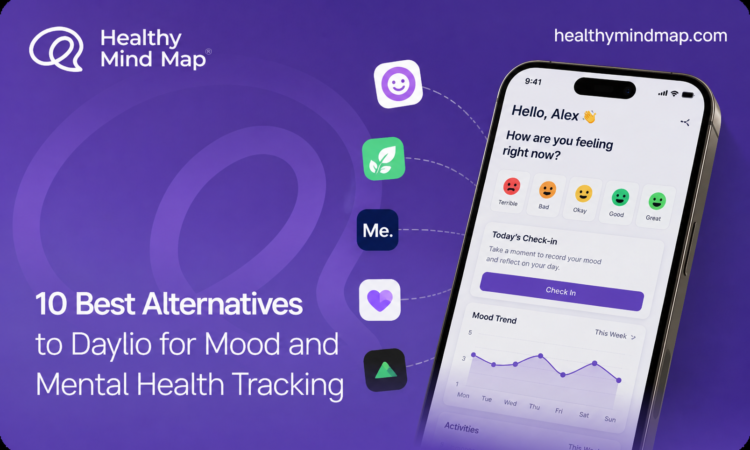
10 Best Alternatives to Daylio for Mood and Mental Health Tracking

Daylio deserves credit for pioneering the two-tap mood log: pick an icon, tap a few activity tags, done in five seconds. That simplicity built a loyal following. But simplicity has a ceiling. Once you’ve been logging for a few months, a lot of people find themselves wanting more than a colorful heatmap they want to know why their mood dips every other Sunday, they want to loop in a therapist or a partner, or they want the app to actually connect their mood to their sleep and activity instead of just displaying it next to it.

If that’s where you’ve landed, you’re not alone it’s the single most common reason people search for a Daylio alternative. We compared the strongest options built to fill exactly that gap, and Healthy Mind Map leads the list for going further than mood logging alone: it connects tracking, structured assessments, biometrics, and a support circle into one coherent picture of your mental health.

Why People Outgrow Daylio

Across the research for this guide, the same handful of limitations came up again and again: a shallow mood vocabulary (typically five levels), no clinical assessments, no medication tracking, and no built-in way to loop in a therapist or trusted person beyond exporting a spreadsheet yourself. None of that makes Daylio a bad app it does one job very well. It just means the “next app” for a lot of people needs to do considerably more.

1. Healthy Mind Map — Best Overall Daylio Alternative

Healthy Mind Map picks up exactly where a simple mood log leaves off. It still gives you a daily check-in fast enough to actually stick with, but everything built around that check-in goes further:

  • Structured assessments, not just a mood icon so instead of five vague levels, you get a real, evolving picture of your mental health over weeks and months.
  • Daily activity tracking across sleep, movement, self-care, and mindfulness, so your mood data has real context instead of floating on its own.
  • Biometric integration with Apple Health and Google Fit the connection to objective health data that a tap-based mood log simply can’t offer on its own. The full list of tools is on the features page.
  • A trusted support circle, entirely optional, letting you share specific insights with a therapist, partner, or friend solving the biggest structural gap in a solo mood-logging app.
  • Insightful analytics that visualize your emotional patterns over time, turning raw entries into something you can actually act on.
  • Encrypted, private-by-default data, with you always in control of what’s shared and with whom you can read the specifics in the privacy policy.

The switch is genuinely low-friction: you can still log your mood in under a minute, so nothing about the habit you already built has to change. What changes is what happens with that data afterward instead of a private heatmap only you ever see, it becomes something you can act on, share selectively, and eventually bring into a therapy session if you choose to. If you’re weighing this specifically against your current therapy support, our guide to the best apps for people already in therapy goes deeper on that use case.

Best for: Anyone who’s outgrown simple mood logging and wants their tracking to connect to real insight, real people, and real progress not just a prettier chart.

2. Bearable

Bearable is the closest match to Daylio in spirit, but with a much broader data model symptoms, medication, sleep, even weather, alongside mood and it surfaces correlations between them. It’s a strong pick if you’re managing a chronic physical condition alongside your mental health, since it treats the two as connected rather than separate. The tradeoff is that the sheer number of trackable factors can start to feel like a lot to keep up with daily.

3. How We Feel

Developed with input from Yale’s Center for Emotional Intelligence, How We Feel stands out for its unusually rich emotional vocabulary well beyond Daylio’s five basic mood levels helping you name what you’re feeling with real precision. It’s also completely free with no premium tier, which is rare in this category. What it doesn’t offer is the sharing or clinical-assessment layer that turns tracking into something actionable with a therapist.

4. Moodflow

Moodflow keeps things intentionally minimal, with a clean, distraction-free visual calendar of your mood history. If Daylio’s interface ever felt cluttered to you, Moodflow is the calmer alternative. It stays close to Daylio’s core simplicity, though, so if your reason for leaving was wanting more depth or sharing capability, Moodflow won’t fully solve that.

5. Reflectly

Reflectly pairs AI-guided journaling prompts with mood logging, nudging you toward positive-psychology-based reflection rather than a quick tap-and-done entry. It’s a good fit if part of what you wanted from a Daylio alternative was more writing depth, since Daylio’s two-tap format deliberately avoids that. The mood tracking itself stays relatively simple compared to dedicated analytics-first trackers.

6. Finch

Finch gamifies the entire process, having you raise a virtual pet by completing your own self-care tasks. It’s an engaging way to stay consistent, especially if streak-based tracking alone stopped motivating you. Like Daylio, it’s built around lightweight daily engagement rather than in-depth clinical assessment or therapist sharing.

7. MindDoc (formerly Moodpath)

MindDoc runs regular, clinically informed questionnaires and can generate a PDF summary you can hand directly to a provider genuinely useful if getting your data in front of a clinician was your main reason for leaving Daylio. The experience leans more clinical and less like a daily habit you look forward to, which is worth knowing going in.

8. eMoods

eMoods was built specifically for tracking mood disorders like bipolar disorder, with detailed logging for mood episodes, sleep, medication, and other symptoms clinicians look for. It’s a strong, purpose-built option if you’re managing a diagnosed mood disorder specifically, though it’s more specialized than a general-purpose wellness tracker.

9. Moodnotes

Moodnotes is built around identifying cognitive distortions the automatic negative thought patterns targeted in CBT and prompting you to reframe them as you write. If your goal in leaving Daylio was to connect mood tracking to actual thought-pattern work, this is a more clinically grounded option, though it functions more as a CBT journal than a full analytics dashboard.

10. Moodfit

Moodfit takes a data-driven “mental fitness” approach, combining mood tracking with CBT tools, gratitude prompts, and goal setting in one dashboard. It’s comprehensive and genuinely useful if you want a toolkit rather than just a tracker, though some users find the range of features takes a little longer to get comfortable with than Daylio’s minimal interface.

Making the Switch Without Losing Your History

If you’re moving on from Daylio, you don’t have to lose the habit you’ve already built most people find the transition takes less than a week once the new check-in becomes routine. What’s worth prioritizing in whichever app you choose is whether it actually does something with your data: surfaces real patterns, supports sharing when you want it, and connects to the rest of your health picture. That’s precisely the gap Healthy Mind Map was built to close, and you can see the full comparison of individual and provider-facing tools on the features page.

Frequently Asked Questions

Is Healthy Mind Map harder to use daily than Daylio?

No, the daily check-in is designed to take about a minute, similar to Daylio’s fast tap-based logging. The added depth shows up in the analytics and sharing tools, not in extra daily effort.

Can I import my old Daylio entries into a new app?

Most alternatives, including Healthy Mind Map, don’t currently support a direct one-click import from Daylio. The common workaround is exporting your Daylio history as a backup (available on Daylio Premium) and starting fresh with your new app going forward, so your historical data isn’t lost even if it’s not automatically merged.

Why would I need clinical assessments if I just want to track my mood?

A daily mood tap tells you how you feel today. A structured assessment, repeated weekly or monthly, tells you whether you’re actually improving over time which is a very different, and often more useful, question if you’re working on your mental health with any intentionality.

Do I have to share my data with anyone if I switch to Healthy Mind Map?

No. Sharing with a support circle or therapist is entirely optional and fully within your control. You can use every tracking feature privately and never share a single entry if that’s what you prefer.

Which Daylio alternative is best if I’m managing a diagnosed condition alongside general mood tracking?

If you need both structured assessments and the option to loop in a therapist, Healthy Mind Map is built for that combination specifically. If your primary need is symptom correlation for a chronic physical condition, Bearable or eMoods are more specialized for that narrower use case.
10 Best Self-Improvement Apps for Mental Wellness in 2026

Self-improvement used to mean stacks of books and vague New Year’s resolutions that quietly died by February. In 2026, it looks different: a quiet five-minute check-in before bed, a breathing exercise between meetings, a weekly trend line that shows you’re actually sleeping better than you were a month ago. The apps that succeed in this space aren’t the ones with the most features they’re the ones that turn “I should really work on myself” into something you actually do, daily, without it feeling like homework.

We compared the tools people are genuinely sticking with this year for mental wellness specifically not fitness, not productivity, but the emotional and psychological side of self-improvement. Healthy Mind Map comes out on top for a simple reason: it’s the only one on this list built to grow with you, connecting your daily habits, your emotional patterns, and the people who support you into one picture instead of scattering them across separate apps.

What Actually Makes a Self-Improvement App Work

Most people don’t abandon self-improvement apps because the content is bad they abandon them because the app never adapts to what it learns about them. A meditation library is nice. A meditation library that notices your mood dips every Sunday evening and gently suggests something for that specific pattern is genuinely useful. The apps below are ranked with that distinction in mind: passive content versus tools that turn your own data into something actionable.

1. Healthy Mind Map — Best for Turning Self-Awareness Into Real Change

Healthy Mind Map was built around a simple idea: self-improvement sticks when you can see it working. Instead of handing you a generic library of content and hoping something resonates, it starts with your own daily reality  your mood, your sleep, your habits, your meaningful moments and slowly builds a picture that’s entirely yours.

Here’s what makes it stand out as a mental wellness tool specifically, not just a habit tracker with a nice interface:

  • Daily activity tracking for the small things that quietly shape your mood, sleep, movement, self-care, mindfulness so you start noticing the cause-and-effect you’d otherwise miss.
  • Weekly and monthly assessments that show real trajectory over time, rather than a single daily mood score with no context.
  • A trusted support circle, entirely optional, so self-improvement doesn’t have to mean doing it alone unless you want to. You choose exactly what to share and with whom.
  • Real-time analytics that highlight what’s actually helping and what’s quietly draining you so your next step is based on evidence, not guesswork. The full breakdown lives on the Healthy Mind Map features page.
  • A resource library of grounding exercises, calming meditations, breathing routines, and short self-guided lessons, curated by licensed clinicians rather than generic wellness content.
  • Biometric syncing with Apple Health and Google Fit, so your sleep and activity data are part of the same story as your emotional patterns instead of living in a separate app you forget to check.

What we appreciated most while researching this space is how unpressured the whole experience is. There’s no streak-shaming, no guilt-tripping notification if you skip a day. The company’s own founders describe the goal as reducing pressure, not adding it and that philosophy shows up everywhere, from the pacing of the check-ins to the tone of the resource library. If you’re curious about the “why” behind the app, it’s worth reading the origin story on the FAQ page, or learning more about the team’s broader mission on the Give Back page.

Best for: Anyone who wants a self-improvement app that actually adapts to their real life, rather than asking them to adapt to the app.

2. Headspace

Headspace remains one of the most trusted names in guided meditation, and for good reason its structured courses take beginners from a first ten-minute session to a genuine, sustainable habit within a few weeks. It’s expanded well beyond meditation into sleep sounds, focus music, and short movement sessions, making it a solid all-around calm-down tool. Where it’s lighter is on personal data: Headspace is largely a content library, not a tool that tracks and reflects your own patterns back to you.

3. Calm

Calm leans into atmosphere the moment you open it, rainfall sounds and soft visuals do a lot of the emotional heavy lifting. Its Sleep Stories are genuinely well-loved, and its “Masterclass” content covers topics like rest and stoicism in a more open-ended, exploratory way than a rigid course structure. Like Headspace, it’s built around content and mood rather than personal tracking, so it pairs well with a tracker rather than replacing one.

4. Fabulous

Fabulous applies behavioral science to habit-building, breaking big lifestyle goals into small, achievable steps with coaching and motivational nudges along the way. It’s particularly effective for people who want structure without feeling overwhelmed, and its habit-stacking approach is backed by real research. It’s a strong pick if your self-improvement goal is specifically habit formation rather than emotional pattern tracking.

5. Finch

Finch turns self-care into a small game: you raise a virtual pet by completing your own real-world wellness tasks. It’s a genuinely clever way to make self-care feel lighter, especially for people who find traditional trackers a bit clinical or joyless. The gamification is the draw and, for some, the limit it’s better suited to simple daily nudges than deep emotional pattern analysis.

6. Happify

Happify blends positive psychology and CBT-style techniques into short games, tracks, and reflective journaling, plus a community hub for connecting with other users. It’s an approachable starting point if the idea of “mental health work” feels intimidating, since it’s intentionally playful. That same playfulness means it may feel too light for anyone looking for structured, in-depth clinical tools.

7. Youper

Youper uses an AI-guided conversational format to help you name what you’re feeling and gently reframe it in the moment. It’s a comfortable middle ground between a full chatbot therapy experience and a simple mood log, and it’s especially useful for people who process better through conversation than through forms or sliders.

8. Shine

Shine focuses on daily affirmations, short guided meditations, and community-driven content, with a particular emphasis on mental health topics often underserved by mainstream wellness apps. Its tone is warm and identity-conscious, which resonates strongly with some users. It’s more content-driven than data-driven, so pattern tracking isn’t its core strength.

9. Reflectly

Reflectly is an AI-guided journaling app that prompts you with positive-psychology-based questions and logs your mood alongside your entries. It’s a nice fit if you already enjoy journaling and want a bit of structure without losing the free-writing feel. Its mood tracking is simpler than dedicated trackers, functioning more as a companion to the journaling than a standalone analytics tool.

10. Sanvello

Sanvello rounds out the list with a mix of mood tracking, guided CBT journeys, and an optional path to coaching or therapy through the platform. It’s comprehensive, which is both its strength and its challenge new users sometimes find the breadth of features a lot to take in during the first week, and the deeper clinical tools generally sit behind a subscription.

Building a Self-Improvement Routine That Actually Lasts

The apps that people stick with in 2026 tend to share one thing in common: they reflect real progress back to the user instead of just handing over more content to consume. That’s the gap Healthy Mind Map was specifically built to close pairing daily tracking with genuine insight, so your self-improvement journey is grounded in your own patterns rather than someone else’s generic program. If you’re already tracking mood elsewhere and considering a switch, our breakdown of the best Daylio alternatives covers how the deeper tracking apps compare.

Frequently Asked Questions

Do self-improvement apps actually work, or is it just placebo?

The honest answer is: it depends on whether you use them consistently and whether the app adapts to what it learns about you. Passive content libraries help some people, but apps that turn your own tracked data into visible patterns tend to produce more lasting behavior change, because the insight feels personally true rather than generic advice.

Is it better to use one all-in-one app or several specialized ones?

Both approaches work, but juggling several apps often means your sleep data, your mood data, and your journaling live in three different places that never talk to each other. An app like Healthy Mind Map that connects activity tracking, mood, biometrics, and reflection in one place tends to be easier to sustain long-term. You can see the full range of tools on the features page.

How much time does self-improvement tracking actually take each day?

Well-designed check-ins take under a minute. If an app is asking for ten minutes of data entry every day, that’s usually a sign of friction that will eventually cause you to quit consistency matters far more than depth on any single day.

Can I use a self-improvement app if I’m also seeing a therapist?

Yes, and many people find it strengthens their therapy rather than competing with it. Apps like Healthy Mind Map let you optionally share progress with a therapist or support circle, so your self-improvement work outside sessions doesn’t stay siloed from the work you’re doing inside them.

Are these apps private, or is my data being sold?

This varies significantly by app, so it’s worth checking each one’s privacy policy directly. Healthy Mind Map publishes its privacy policy openly and is built around the principle that you stay in control of what’s shared and with whom.


10 Best Mental Health Apps for People Already in Therapy (2026 Guide)

Being in therapy is one of the best decisions you can make for yourself but real healing rarely happens only inside the fifty minutes you spend with your therapist each week. It happens in the in-between moments: the Tuesday afternoon when your mood dips for no obvious reason, the sleepless night before a hard conversation, the small win you want to remember before your next session.

That’s exactly the gap mental health apps are built to fill. Not to replace therapy nothing should but to carry what happens between sessions into the room with you, so your therapist isn’t working from memory and neither are you.

We looked at the mood trackers, assessment tools, and companion apps that therapy clients and clinicians actually rely on in 2026, and ranked the ten that do this best. Healthy Mind Map tops the list, and below it you’ll find nine other solid options, each with a different strength worth knowing about.

Why an App Still Matters When You Already Have a Therapist

A good therapist helps you understand why you feel a certain way. A good app helps you notice when and what the patterns that are genuinely hard to recall accurately a week later. Research on recall bias consistently shows that people underreport or misremember emotional highs and lows once a few days have passed. An app that captures your mood, habits, and reflections in real time gives your therapist a far more accurate picture of your week than your memory alone can offer at the start of a session.

The right app should do three things: make daily check-ins effortless, turn scattered data into patterns you and your therapist can actually use, and let you control exactly what gets shared and with whom. That’s the bar we used for this list.

1. Healthy Mind Map — Best Overall for Therapy Clients

Healthy Mind Map was built specifically for people who are already doing the work in therapy and want a way to carry it into their everyday life. It was founded by people who sat through hundreds of hours of therapy themselves and kept running into the same frustration: there was no simple way to practice what their therapist taught them outside the therapy office, or to show up to the next session with real evidence of what was working.

What sets it apart from the rest of this list is how deliberately it’s designed around the therapist-client relationship, rather than treating that as an afterthought:

  • Daily mood check-ins that take under a minute, so tracking never becomes a chore you abandon after week two.
  • Structured, industry-standard assessments that measure progress over weeks and months instead of relying on how you happen to feel on the day of your appointment.
  • A trusted support circle where you decide exactly what to share, and with whom your therapist, a partner, a close friend with nothing shared automatically. You can browse the full breakdown of these tools on the Healthy Mind Map features page, which separates what’s built for individuals from what’s built for the providers supporting them.
  • Biometric integration with Apple Health and Google Fit, so sleep and activity data feed into the same picture as your mood, rather than living in a separate app your therapist never sees.
  • Insightful analytics that turn weeks of check-ins into visual trends, so instead of walking into session saying “I guess I’ve been kind of okay,” you can point to exactly when things shifted and what was happening around that time.
  • A resource library curated by licensed clinicians, with grounding exercises, breathing routines, and reflective prompts you can use between sessions to reinforce what you’re working on.

For therapists, the app was designed to add context without adding administrative burden. Clients share only what they choose to make visible, so clinicians get a genuine snapshot of the week plateaus, breakthroughs, and everything in between without needing to monitor anyone around the clock. It’s flexible enough to sit alongside CBT, DBT, trauma-informed care, or general coaching, and the company backs this up with a published Business Associate Agreement, which is worth checking if your provider needs one on file.

If you want to see how it fits into an actual practice rather than just an individual’s phone, therapist Kyle Barth, LMFT, put it simply: it helps clients identify what’s genuinely working for them, and steers treatment toward change that actually lasts. You can read more perspectives like this on the testimonials page.

Best for: Anyone in active therapy who wants their sessions to be grounded in real data instead of a foggy recap of the week and any therapist who wants that same context without extra admin work.

2. Daylio

Daylio built its entire reputation on speed. You pick a mood icon, tap a few activity tags, and you’re done no writing required. It’s an excellent habit to build if consistency is your biggest obstacle, and its colorful monthly heatmap is genuinely satisfying to look back on. The tradeoff is depth: Daylio wasn’t designed with therapy sharing or clinical assessments in mind, so if your therapist wants more context than a mood score and a tag, you’ll likely be exporting spreadsheets manually rather than sharing insights directly. Our companion guide on Daylio alternatives breaks down how mood-tracking-only apps compare on depth and privacy.

3. Bearable

Bearable leans into detail. Beyond mood, it lets you log symptoms, medication, sleep, and even weather, then shows you correlations between them useful if you’re managing a mental health condition alongside a physical one. It’s a strong choice for people who want granular data, though the sheer number of trackable factors can feel like a lot to maintain daily, and it isn’t built around the therapist-sharing workflow the way a purpose-built companion app is.

4. Sanvello

Sanvello combines mood tracking with CBT-based tools, guided journeys for anxiety and stress, and an optional path to professional coaching or therapy through the platform itself. It’s a comprehensive option if you want structured self-help content bundled with your tracking. Some users find the sheer number of features a little overwhelming at first, and the deeper clinical tools typically require a subscription.

5. Wysa

Wysa’s standout feature is its AI chatbot, which walks you through CBT-based exercises and coping techniques in a conversational format. It’s a good option on nights when you want to process a feeling immediately rather than wait for your next session. It’s less built for longitudinal tracking you’d hand off to a therapist, and more for in-the-moment emotional support.

6. Youper

Youper also uses an AI-guided conversation format, asking questions that help you name and reframe what you’re feeling, then logging the emotional patterns it picks up on over time. It’s approachable for people newer to self-reflection, though like Wysa, the emphasis is more on the conversation itself than on producing shareable clinical assessments.

7. MindDoc (formerly Moodpath)

MindDoc runs regular, clinically informed questionnaires and turns your answers into a “risk assessment” style overview you can export as a PDF. That export makes it one of the more therapy-friendly options on this list, since you genuinely can hand a document to your provider. The tradeoff is that the experience feels more clinical and less like a daily companion you look forward to opening.

8. Woebot

Woebot uses a friendly, chat-based AI to check in on your mood and walk you through short CBT-style exercises. It’s approachable and low-pressure, which makes it a nice on-ramp for people who feel intimidated by more data-heavy trackers. It’s better suited to daily emotional check-ins than to building a longitudinal record you’d bring into a therapy session.

9. Moodnotes

Moodnotes focuses on identifying cognitive distortions the automatic negative thought patterns CBT is designed to address and prompts you to reframe them as you journal. It’s a genuinely useful companion if your therapist is actively working on thought-pattern awareness with you, though it functions more as a journaling tool than a full progress-tracking and sharing system.

10. Talkspace

Talkspace is a bit different from the rest of this list because it’s a full therapy platform rather than a companion app text, video, and live messaging with a licensed therapist built in. Some people in traditional in-person therapy use it as a secondary channel for quick check-ins between sessions. It’s worth knowing about, but it solves a different problem than tracking and sharing progress with a therapist you already see.

How to Choose the Right One for You

If you’re still deciding, ask yourself what’s actually missing from your current therapy experience. If it’s “my therapist doesn’t know what my week was really like,” you want something built around sharing, like Healthy Mind Map. If it’s “I just need to vent right now,” an AI chat app like Wysa or Woebot might fit better in the moment. If you’re weighing this against a simpler tracker you’ve already tried.

Frequently Asked Questions

Can a mental health app replace therapy?

No. None of the apps on this list, including Healthy Mind Map, are designed to replace a licensed therapist. They’re built to support the work you’re already doing in session by capturing what happens in between.

Will my therapist actually look at data from an app?

Many will, especially if the data is easy to review and clearly presented. Apps that let you export or directly share structured summaries like Healthy Mind Map’s shareable insights or MindDoc’s PDF export tend to get used far more than raw spreadsheets or screenshots.

Is it safe to share mental health data through an app?

It depends entirely on the app’s privacy practices. Look for encryption, clear control over what’s shared and with whom, and, if your provider needs it, a signed Business Associate Agreement. Healthy Mind Map publishes its BAA and privacy policy for exactly this reason.

Do I need to share everything with my therapist?

No, and you shouldn’t feel pressured to. The best apps, including Healthy Mind Map, let you choose exactly what becomes visible to your support circle you can track privately and share selectively.

What if I’m not in therapy yet but I’m considering it?

Start tracking anyway. Apps like Healthy Mind Map work well independently of therapy, and arriving at your first session with even a few weeks of mood and activity data tends to make that first conversation far more productive. You can browse the full feature set on the features page before you download anything.


Bearable vs Healthy Mind Map: Symptoms, Habits, or Therapy Progress?

Choosing the right mental wellness platform isn’t just about downloading the app with the highest ratings. It’s about finding a tool that matches your personal goals. Some people want to monitor symptoms of chronic conditions, while others are looking to build healthier routines, understand emotional patterns, or stay consistent between therapy sessions.

That is why comparisons like Bearable vs Healthy Mind Map have become increasingly common in 2026. Although both platforms support emotional well-being, they are designed with different priorities in mind.

If you’re searching for a Bearable app alternative, wondering whether you need a therapy progress tracker, or trying to decide between a habit tracking app and a symptom tracking app, understanding the strengths of each platform will help you make a more informed decision.

This guide compares Bearable vs Healthy Mind Map across features, ideal users, and long-term value so you can choose the platform that best supports your mental health journey.

Bearable vs Healthy Mind Map: Understanding the Core Difference

At first glance, both apps may appear similar because they allow users to record information about their health and well-being. However, the philosophy behind each platform is quite different.

The Healthy Mind Map app focuses on emotional awareness, daily habits, behavioral insights, and long-term personal growth. Rather than simply collecting information, it helps users understand how everyday routines influence emotional well-being.

Bearable, on the other hand, is primarily designed as a symptom tracking app. It allows users to monitor symptoms, medications, sleep, nutrition, energy, and other health-related variables to identify possible correlations.

Understanding this distinction is essential when comparing Bearable vs Healthy Mind Map. One platform prioritizes emotional awareness and behavioral understanding, while the other emphasizes comprehensive symptom monitoring.

Healthy Mind Map: Built Around Emotional Awareness

The Healthy Mind Map app is designed for people who want to build healthier daily habits while developing a deeper understanding of their emotions. As a modern mental wellness app, Healthy Mind Map combines:

  • Mood tracking
  • Daily activity tracking
  • Progress assessments
  • Wellness resources
  • Emotional insights
  • Personal analytics

These features work together to support long-term emotional awareness instead of focusing only on symptom logging.

Unlike many traditional wellness platforms, the Healthy Mind Map app encourages users to observe how sleep, movement, self-care, and daily behaviors influence emotional well-being. For individuals focused on building daily mental health habits, this structured approach creates valuable long-term insights.

Bearable: A Powerful Symptom Tracking App

Bearable approaches emotional wellness from a broader health-monitoring perspective. Its primary strength is functioning as a comprehensive symptom tracking app that allows users to record:

  • Physical symptoms
  • Mood
  • Sleep
  • Medication
  • Nutrition
  • Energy levels
  • Lifestyle factors

This makes Bearable particularly useful for individuals managing chronic conditions or trying to identify physical and emotional correlations. If your primary goal is detailed symptom analysis, Bearable performs exceptionally well as both a mental health tracking app and comprehensive health tracker.

However, users primarily interested in emotional awareness or behavioral improvement may find that its detailed tracking requires more effort to maintain consistently.

Mood Tracking vs Behavior Tracking: Which Is More Valuable?

One of the biggest differences in the Bearable vs Healthy Mind Map comparison involves mood tracking vs habit tracking. Mood tracking answers the question:

  • “How am I feeling?”
  • Behavior tracking answers:
  • “What happened before I felt this way?”

The Healthy Mind Map app emphasizes both emotional reflection and behavioral awareness. Users can observe how routines influence emotional changes over time, creating stronger self-awareness.

Bearable also supports mood monitoring, but its primary focus remains symptom correlations and health data. When discussing mood tracking vs behavior tracking, neither approach is universally better. Instead, they solve different problems.

People looking to improve daily mental health habits often benefit more from understanding behavioral patterns alongside emotional changes.

Which App Works Better as a Therapy Progress Tracker?

Many people today use digital tools between therapy sessions to stay engaged with their mental health goals. As a therapy progress tracker, Healthy Mind Map provides users with emotional reflections, activity tracking, and progress assessments that help them recognize changes over time.

Its structured insights make it easier to discuss recurring patterns during therapy sessions. Bearable can also function as a therapy progress tracker, particularly for individuals whose therapy focuses on symptom management or chronic health conditions. Ultimately, the right choice depends on what you want to monitor.

If your therapist encourages reflection on emotional habits and daily routines, the Healthy Mind Map app offers an intuitive structure. If your focus involves medications, symptoms, or physical health, Bearable may provide more detailed records.

Habit Tracking App or Symptom Tracking App?

When comparing Bearable vs Healthy Mind Map, another important question is whether you need a habit tracking app or a symptom tracking app. A habit tracking app helps users develop healthier routines by monitoring behaviors such as:

  • Sleep
  • Exercise
  • Mindfulness
  • Self-care
  • Daily activities

A symptom tracking app, however, focuses on recording health symptoms, medications, pain levels, fatigue, and other measurable conditions. Healthy Mind Map places greater emphasis on building sustainable daily mental health habits through emotional awareness and routine tracking. Bearable provides greater flexibility for users managing complex health conditions. Choosing between them depends entirely on your goals.

Is Healthy Mind Map a Good Bearable App Alternative?

For many users, yes. If your priority is emotional growth rather than medical symptom management, the Healthy Mind Map app is an excellent Bearable app alternative. Rather than requiring extensive health logging, it focuses on helping users understand emotional trends through:

  • Daily activity tracking
  • Mood reflection
  • Behavioral insights
  • Wellness resources
  • Progress assessments

This creates a simpler experience for individuals who want to strengthen emotional awareness without maintaining highly detailed health records. As a mental wellness app, Healthy Mind Map offers a balanced approach that encourages consistency over complexity.

Which Mental Health Tracking App Is Right for You?

There is no universal answer. The right mental health tracking app depends on your personal goals. Choose Healthy Mind Map if you want to:

  • Build healthier routines
  • Improve emotional awareness
  • Develop consistent daily mental health habits
  • Understand behavior patterns
  • Use a practical therapy progress tracker

Choose Bearable if you want to:

  • Monitor complex symptoms
  • Track medications
  • Record physical health variables
  • Analyze detailed health correlations

Final Thoughts

The discussion around Bearable vs Healthy Mind Map is not about which platform is universally better. It is about choosing the right tool for your personal goals.

If your focus is understanding symptoms and health correlations, Bearable is a capable mental health tracking app. If your goal is strengthening emotional awareness, building daily mental health habits, and developing healthier routines, the Healthy Mind Map app offers a more focused experience. The best mental wellness app is the one that supports your everyday life, encourages consistency, and helps you better understand yourself over time.

Frequently Asked Questions

What is the difference between Bearable vs Healthy Mind Map?

Bearable vs Healthy Mind Map comes down to purpose. Healthy Mind Map focuses on emotional awareness and daily habits, while Bearable emphasizes symptom monitoring and health tracking.

Is Healthy Mind Map a good Bearable app alternative?

Yes. The Healthy Mind Map app is a strong Bearable app alternative for users who prioritize emotional awareness, behavior tracking, and long-term personal growth.

Which app is better as a therapy progress tracker?

Both can work as a therapy progress tracker, but Healthy Mind Map focuses more on emotional patterns and daily mental health habits, while Bearable emphasizes symptoms and health data.

What is the difference between mood tracking vs behavior tracking?

Mood tracking vs behavior tracking involves recording emotions versus understanding the habits and routines that influence those emotions. Combining both provides deeper insights.

Should I choose a habit tracking app or a symptom tracking app?

If your goal is building healthier routines and emotional awareness, choose a habit tracking app like Healthy Mind Map. If you’re monitoring physical symptoms or chronic conditions, a symptom tracking app like Bearable may be a better fit.

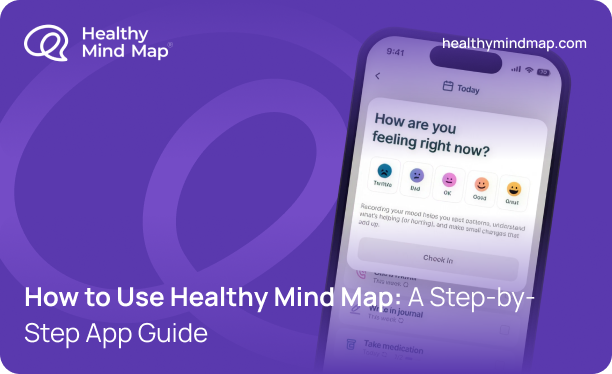
How to Use Healthy Mind Map: A Step-by-Step App Guide

Starting a new wellness app is exciting, but it’s common to wonder where to begin. Many people download an app with the intention of improving their emotional well-being, only to stop using it because they aren’t sure how to make it part of their daily routine.

That’s why this Healthy Mind Map guide is designed to help you get the most from the platform. Whether you’re new to emotional tracking or already use digital wellness tools, understanding how to use Healthy Mind Map will help you build consistent habits and gain more meaningful insights over time.

Unlike many apps that focus on only one aspect of mental wellness, the Healthy Mind Map app combines emotional awareness, habit tracking, wellness resources, and personal insights into one experience. This guide will walk you through each step so you can confidently begin using the platform.

What Is Healthy Mind Map?

Before learning how to use Healthy Mind Map, it’s helpful to understand what the platform is designed to do. The Healthy Mind Map app is a self-guided behavioral health app that helps individuals better understand their emotions, daily routines, and overall well-being. Instead of providing therapy services, it encourages consistent reflection through mental health self-monitoring, daily activity tracking, mood logging, and progress assessments.

As a modern wellness tracking app, Healthy Mind Map is built to help users recognize emotional patterns, develop healthier habits, and make informed decisions based on their own experiences.

The goal is simple: increase awareness through consistency.

Step 1: Create Your Profile and Set Your Goals

The first step in this Healthy Mind Map guide is setting up your personal profile. When you first open the Healthy Mind Map app, take a few moments to complete your basic information and define what you hope to achieve.

Your goals might include:

  • Reducing daily stress
  • Building healthier routines
  • Improving emotional awareness
  • Tracking personal progress
  • Strengthening self-reflection

Having clear objectives helps guide your mental health tracking journey and gives your progress greater context over time.

Step 2: Complete Your Daily Mood Check-In

One of the most valuable features of the Healthy Mind Map app is its built-in mood tracking app functionality. Each day, record how you’re feeling by completing a short mood check-in.

This doesn’t need to be complicated. The purpose of mental health self-monitoring is simply to build awareness through consistency. Over time, your mood tracking app entries begin to reveal emotional patterns that are difficult to notice from memory alone. The more consistent your check-ins, the more meaningful your mental health tracking becomes.

Step 3: Track Your Daily Habits

Emotional health is influenced by much more than thoughts alone. That’s why the Healthy Mind Map app includes a daily habit tracker that allows users to monitor routines such as:

  • Sleep
  • Physical activity
  • Mindfulness
  • Self-care
  • Daily movement

Using the daily habit tracker consistently helps connect everyday behaviors with emotional well-being. This combination of habits and emotions makes the platform much more than a simple mood tracking app.

Instead, it becomes a comprehensive wellness tracking app that helps users understand the relationship between lifestyle choices and emotional health.

Step 4: Review Your Progress Assessments

Tracking emotions is valuable, but reviewing progress is where real learning begins. Healthy Mind Map includes regular assessments that allow users to measure emotional changes over time. These assessments support therapy progress tracking by helping individuals recognize patterns, improvements, and recurring challenges.

Although the platform is not a replacement for therapy, many users find that these insights make conversations with healthcare professionals more productive. This type of mental health tracking creates a clearer picture of long-term emotional well-being.

Step 5: Explore Wellness Resources

Another important part of learning how to use Healthy Mind Map is exploring the built-in wellness resources. The platform includes self-guided tools such as:

  • Grounding exercises
  • Breathing techniques
  • Mindfulness activities
  • Reflection prompts
  • Emotional wellness resources

These features support everyday mental health self-monitoring by encouraging users to pause, reflect, and reconnect with themselves during stressful moments. Combined with the daily habit tracker, these resources strengthen emotional awareness over time.

Step 6: Understand Your Personal Insights

One of the biggest advantages of the Healthy Mind Map app is its ability to transform daily entries into meaningful insights. Instead of simply storing information, the platform analyzes patterns related to:

  • Mood
  • Daily habits
  • Emotional changes
  • Wellness routines

These insights help users better understand their emotional experiences through ongoing mental health tracking. For individuals using the app alongside professional care, these summaries can also support therapy progress tracking by providing structured information between appointments.

Step 7: Stay Consistent

The most important lesson in this Healthy Mind Map guide is consistency. A behavioral health app becomes valuable only when it becomes part of your routine. Instead of trying to record everything perfectly, focus on small daily actions.

  • Complete your mood tracking app check-in.
  • Update your daily habit tracker.
  • Review your insights regularly.
  • Consistency creates awareness.
  • Awareness creates growth.

Can Healthy Mind Map Be Used Alongside Therapy?

Yes. Although the Healthy Mind Map app does not provide therapy services, it can complement professional care. Many individuals use it for therapy progress tracking, allowing them to observe emotional changes between appointments.

Likewise, features such as mental health self-monitoring, habit tracking, and the anxiety tracking app tools provide valuable information that users may choose to discuss with their healthcare providers. The platform supports awareness; it does not replace professional treatment.

Final Thoughts

Learning how to use a Healthy Mind Map isn’t about mastering every feature on the first day. It’s about building a routine that helps you understand yourself a little better every day.

By combining a mood tracking app, daily habit tracker, mental health tracking, therapy progress tracking, and structured mental health self-monitoring, the Healthy Mind Map app provides a practical framework for long-term emotional awareness.

Start small. Stay consistent. Over time, the patterns you discover may become some of the most valuable insights you gain about yourself.

Frequently Asked Questions

How do I use a Healthy Mind Map?

This Healthy Mind Map guide recommends starting with daily mood check-ins, habit tracking, wellness resources, and regular progress reviews to build consistent emotional awareness.

Is Healthy Mind Map a Behavioral Health App?

Yes. The Healthy Mind Map app functions as a self-guided behavioral health app focused on emotional awareness, daily habits, and personal insights.

Can Healthy Mind Map replace therapy?

No. Healthy Mind Map supports mental health self-monitoring and therapy progress tracking, but it is not a replacement for professional mental health care.

Does Healthy Mind Map include a daily habit tracker?

Yes. The platform includes a daily habit tracker that helps users monitor routines such as sleep, movement, mindfulness, and self-care alongside emotional tracking.

Can I use a Healthy Mind Map as an anxiety tracking app?

Yes. While it is not designed to diagnose anxiety, the Healthy Mind Map app includes anxiety tracking app features that help users observe emotional patterns and identify possible triggers over time.

Mood vs Emotion vs Feeling: What Is the Difference?

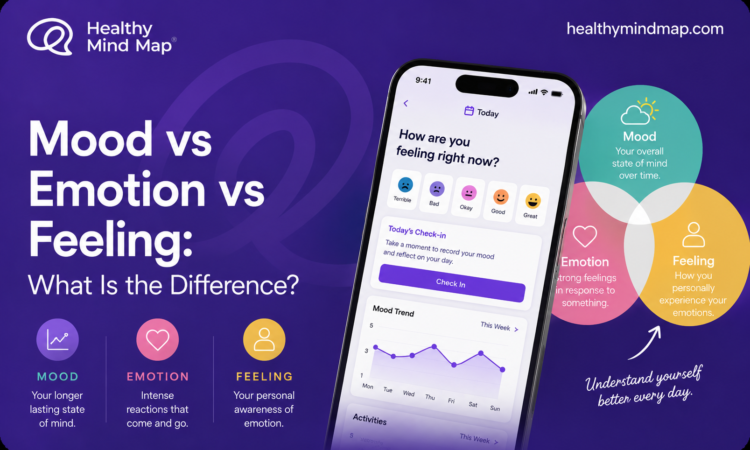
People often use the words mood, emotion, and feeling as if they mean exactly the same thing. You’ll hear someone say, “I’m in a bad mood,” “I’m feeling anxious,” or “I experienced a strong emotion,” often referring to the same situation.

But are they actually the same? Not quite.

Understanding the difference between mood vs emotions and feelings vs emotions is more than just learning psychological terminology. It can help you recognize your emotional patterns, communicate more clearly, and better understand your mental well-being.

If you’ve ever wondered what is the difference between feelings and emotions, or questioned whether emotions and feelings are the same thing, you’re not alone. These are among the most frequently searched mental health questions online today. Let’s explore how psychologists define moods, emotions, and feelings, and why understanding the difference matters.

Are Emotions and Feelings the Same Thing?

One of the most common questions people ask is, “Are emotions and feelings the same thing?” The short answer is no. Although they are closely connected, emotions vs feelings describe different parts of the same experience.

An emotion is your brain and body’s automatic response to an event or situation. It happens quickly and often without conscious thought. A feeling is your personal interpretation of that emotional response. It develops after your brain processes the emotion and gives it meaning.

This is why discussions around feelings versus emotions continue to appear in psychology research. Emotions occur first, while feelings represent your conscious awareness of those emotions. Understanding feeling versus emotion helps explain why two people can experience the same event but describe it differently.

Mood vs Emotions: What Makes Them Different?

Another common source of confusion involves mood vs emotions. Emotions are usually brief and connected to a specific event. Moods tend to last longer and are often less connected to one particular cause.

For example:

  • You receive unexpected good news.
  • Your immediate excitement is an emotion.
  • The positive outlook that continues throughout the day becomes your mood.
  • This illustrates the difference between mood and emotion.

When discussing emotion versus mood, psychologists generally describe emotions as short-lived reactions, while moods are longer-lasting emotional states. Understanding mood versus emotion helps explain why you sometimes wake up feeling positive or irritable without immediately knowing why.

Mood vs Feelings: Why They Are Not Identical

The comparison of mood vs feelings can also be confusing. Feelings are your conscious experience of emotions. Moods provide the emotional background that influences those feelings.

Imagine having a stressful week. Your overall mood may become low or tense. Throughout that week, you might experience individual feelings such as frustration, disappointment, relief, or hope.

Understanding moods and feelings helps explain why several different feelings can exist within the same overall mood. This relationship between mood vs feelings is one reason emotional awareness becomes easier with consistent reflection.

Difference Between Thoughts and Feelings

Another important distinction involves the difference between thoughts and feelings. Thoughts are ideas, beliefs, or interpretations created by the mind. Feelings are emotional experiences.

For example:

  • Thought: “I don’t think I performed well today.”
  • Feeling: “I feel disappointed.”

Although thoughts influence emotions, they are not the same thing. Understanding the difference between thoughts and feelings helps people respond more effectively to emotional situations. Many psychologists encourage separating thoughts versus feelings because doing so improves emotional regulation and self-awareness.

Sentiment vs Emotion

People also ask about sentiment vs emotion. Although these terms overlap, they are not identical. An emotion is usually immediate and personal. Sentiment often refers to a broader attitude or opinion developed over time.

For example:

  • Feeling happy after receiving good news is an emotion.
  • Having a generally optimistic outlook on life reflects sentiment.

Understanding sentiment vs emotion helps clarify why emotional experiences can change quickly while overall attitudes remain relatively stable.

Why Understanding Moods and Feelings Matters?

Knowing the differences between emotions vs feelings, mood vs emotions, and thoughts versus feelings is not just useful for psychology students. It improves everyday emotional awareness.

When people understand the difference between mood and emotion, they become better at identifying:

  • Emotional triggers
  • Long-term mood patterns
  • Stress responses
  • Behavioral influences

Instead of saying, “I’m having a bad day,” they begin asking more specific questions:

  • Is this a temporary emotion?
  • Is my overall mood changing?
  • What thoughts are influencing these feelings?

These questions create greater emotional clarity.

How Daily Mood Tracking Supports Emotional Awareness?

Recognizing emotional differences becomes much easier when you track them consistently. Using a daily mood tracker app allows individuals to observe emotional changes over time rather than relying on memory.

Through daily mood tracking, users begin noticing patterns between emotions, moods, routines, and daily experiences. For example, a mood tracker app may reveal that poor sleep influences your overall mood, while stressful conversations trigger specific emotions.

Over time, daily mood tracking helps users better distinguish between short-term emotional reactions and longer-lasting mood changes.

How Healthy Mind Map Helps You Understand Emotional Patterns?

Healthy Mind Map is designed to support emotional awareness through structured reflection rather than simply recording moods. Instead of asking only “How do you feel today?”, the platform encourages users to connect emotions with daily habits, activities, and routines.

Through consistent daily mood tracking, the Healthy Mind Map platform helps users identify emotional patterns that may otherwise go unnoticed. As a mood tracker app, it supports long-term self-awareness by helping users understand the relationship between moods, feelings, behaviors, and everyday experiences.

Rather than replacing professional care, Healthy Mind Map provides practical tools that encourage reflection and emotional understanding over time.

Final Thoughts

Understanding emotions vs feelings, mood vs emotions, and the difference between thoughts and feelings is more than learning new vocabulary. It is about learning how your mind works.

When you understand the difference between an emotion, a feeling, and a mood, you become better equipped to recognize patterns, communicate clearly, and respond thoughtfully instead of reacting automatically.

And with consistent daily mood tracking through tools like Healthy Mind Map, those patterns become even easier to understand. Because emotional awareness doesn’t begin with having all the answers. It begins with learning to ask better questions about how you feel.

Frequently Asked Questions

What is the difference between feelings and emotions?

The difference between feelings and emotions is that emotions are automatic biological responses, while feelings are your conscious experience and interpretation of those emotions.

Are emotions and feelings the same thing?

No. Although closely connected, emotions and feelings are not the same thing. Emotions occur first, while feelings develop after your brain processes those emotional reactions.

What is the difference between mood and emotion?

The difference between mood and emotion is that emotions are usually brief and triggered by specific events, while moods last longer and may not have one clear cause.

What is the difference between thoughts and feelings?

The difference between thoughts and feelings is that thoughts are mental interpretations, while feelings are emotional experiences. Understanding thoughts versus feelings improves emotional awareness.

Can a mood tracker app help identify moods and feelings?

Yes. A mood tracker app supports daily mood tracking, helping users recognize long-term patterns involving moods and feelings, emotions, and daily habits.


5 Best Mood Tracker Apps to Understand Yourself Better

Understanding your emotions isn’t always easy. Some days you feel energized and motivated, while other days you may feel stressed, overwhelmed, or simply “off” without knowing why. This is where mood tracking becomes valuable. Recording your emotions consistently helps you recognize patterns, identify triggers, and make better decisions about your daily habits.

Today, many best mood tracker apps go far beyond simply asking, “How are you feeling?” They combine mood logging, habit tracking, journaling, and data insights to help users better understand their emotional well-being.

If you’re looking for the best mood tracker apps in 2026, this guide compares five excellent options based on ease of use, features, privacy, and long-term value.

How We Evaluated These Apps?

To make this comparison useful, we considered several factors that matter most to everyday users:

  • Ease of daily use
  • Quality of emotional insights
  • Privacy and data control
  • Habit and mood tracking capabilities
  • Journaling experience
  • Overall value for long-term self-awareness

Each app serves a different purpose, so the best choice depends on your personal goals.

1. Healthy Mind Map: Best for Understanding Emotional Patterns

When it comes to combining emotional awareness with everyday habits, Healthy mind map stands out among today’s best mood tracker apps.

Unlike many apps that focus only on mood logging, Healthy mind map encourages users to understand why they feel the way they do. The platform combines emotional tracking with daily activity tracking, wellness resources, progress assessments, and visual insights.

Rather than acting as a therapy platform, Healthy mind map helps users build long-term self-awareness through structured reflection.

Key Features

  • Comprehensive daily mood log
  • Habit and activity tracking
  • Emotional pattern recognition
  • Wellness resources
  • Progress assessments
  • Personal analytics

As both a mental health tracking app and one of today’s leading emotional wellness apps, Healthy mind map helps users connect daily habits with emotional well-being.

Best for: Individuals who want long-term emotional awareness rather than simple mood logging.

2. Daylio: Mood Journal App for Simplicity

Daylio has remained one of the most recognizable best mood tracker apps because of its simple interface.

Instead of requiring lengthy journal entries, users select moods and activities with just a few taps. This makes it ideal for individuals who want a lightweight mood journal app without spending much time each day. The app also generates visual reports that help identify recurring emotional patterns.

Key Features

  • Quick mood logging
  • Activity tracking
  • Calendar view
  • Mood statistics
  • Daily reminders

Daylio is particularly useful for users beginning their emotional tracking journey.

3. Bearable: Mental Health Tracking App for Multiple Symptoms

Bearable is designed for users who want more detailed health tracking. As a comprehensive mental health tracking app, it allows users to monitor mood, sleep, medications, energy levels, symptoms, nutrition, and more. Its detailed reports make it especially useful for identifying long-term trends.

Key Features

  • Symptom tracking
  • Mood monitoring
  • Sleep tracking
  • Health correlations
  • Personalized reports

    For users seeking advanced data, Bearable remains one of the strongest mental health self-care apps available today.

    You don’t have to do this alone.

    Share your progress with the people who support you.

    Get the App

    4. Reflectly: Mood Diary Software for Guided Journaling

    Reflectly focuses heavily on reflection through guided prompts. Instead of simply recording emotions, it encourages users to think about why they feel certain ways through structured journaling. Its AI-inspired prompts make it one of the most engaging examples of modern mood diary software.

    Key Features

    • Guided journaling
    • Reflection prompts
    • Mood tracking
    • Positive psychology exercises
    • Personal insights

    Reflectly appeals to users who enjoy writing as part of their emotional wellness routine.

    5. Moodflow: Moslty Used for Mindfulness Tracking Tools

    Moodflow combines mood tracking with habit analysis and mindfulness practices. Its visual charts make emotional trends easy to understand while encouraging healthier daily routines. The app also includes several mindfulness tracking tools designed to improve emotional awareness.

    Key Features

    • Mood history
    • Habit tracking
    • Meditation support
    • Emotional trend reports
    • Wellness reminders

    Moodflow works well for users who want to combine mindfulness with structured emotional tracking.

    Which App Is Right for You?

    Each platform offers something slightly different. If your goal is simply recording emotions, a mood journal app like Daylio may be enough. If you’re looking for advanced symptom monitoring, Bearable provides detailed tracking. If guided journaling motivates you, Reflectly is an excellent choice. If mindfulness is your primary focus, Moodflow offers useful mindfulness tracking tools.

    However, if you want to understand how your habits, emotions, and daily routines interact over time, Healthy mind map offers one of the most balanced experiences among today’s best mood tracker apps.

    Its combination of emotional tracking, daily activities, wellness resources, and structured insights makes it a strong option for users seeking long-term emotional awareness.

    Comparison at a Glance

    App Best For Key Strength
    Healthy mind map Emotional awareness & habit insights Combines mood tracking, daily activities, analytics, and wellness resources
    Daylio Quick mood logging Simple, beginner-friendly mood journal
    Bearable Comprehensive health tracking Tracks symptoms, mood, sleep, and habits
    Reflectly Guided journaling Reflection-focused mood diary software
    Moodflow Mindfulness routines Mood tracking with mindfulness tracking tools

    Final Thoughts

    The best mood tracker is the one you’ll actually use consistently. Whether you prefer a simple daily mood log, guided journaling, advanced analytics, or integrated wellness tools, today’s best mood tracker apps offer more options than ever before.

    If your goal is to better understand yourself, not just record your emotions, Healthy mind map provides a thoughtful balance of emotional tracking, daily habit awareness, and meaningful insights that support long-term personal growth.

    After all, lasting emotional wellness starts with understanding your own patterns, one day at a time.

    Frequently Asked Questions

    What are the best mood tracker apps in 2026?

    Some of the best mood tracker apps include Healthy mind map, Daylio, Bearable, Reflectly, and Moodflow. Each offers different features depending on your wellness goals.

    What is a mood journal app?

    A mood journal app helps users record daily emotions, identify patterns, and reflect on emotional experiences over time.  You can learn more about how this works on our FAQs page.

    Why should I use a mental health tracking app?

    A mental health tracking app helps improve self-awareness by showing how emotions, habits, and routines influence overall well-being.

    Are emotional wellness apps better than paper journals?

    Many emotional wellness apps provide visual reports, reminders, and analytics that are difficult to create manually, making long-term tracking easier.

    What should I look for in mood diary software?

    Look for secure data storage, easy mood logging, useful insights, customizable tracking, and features that encourage consistent use.

    Private Mood Tracking: How to Decide What You Want to Share

    Sharing emotions has become easier than ever. From social media posts to wellness communities and digital journals, people now have countless ways to express how they feel. At the same time, many individuals are becoming more protective of their personal information, especially when it comes to mental health.

    This growing concern has made private mood tracking one of the biggest priorities for people using mental health apps 2026. While tracking emotions can improve self-awareness, not everyone wants to share every thought, mood, or personal experience with others.

    So how do you decide what should stay private and what is worth sharing?

    The answer depends on your comfort level, your goals, and the type of support you’re looking for. Whether you’re using a mood tracker app, an emotion tracking app, or exploring the latest mental health apps 2026 trends, understanding your privacy preferences is just as important as tracking your emotions.

    Why Private Mood Tracking Matters?

    Emotional tracking works best when people feel comfortable being honest. If users worry that someone else might see their entries, they may avoid recording difficult emotions or leave out important details. That limits the value of the tracking process.

    This is why private mood tracking has become such an important feature in modern mental health apps 2026.

    A well-designed mood tracking app should create a space where users can reflect openly without feeling judged or exposed. Whether you’re recording stress levels, anxiety, or everyday emotional changes, privacy encourages honesty.

    Not Every Emotion Needs to Be Shared

    Many people assume that emotional wellness means sharing everything they feel. One of the benefits of private mood tracking is that it allows you to process emotions before deciding whether you want to discuss them with someone else.

    For example, your daily mood tracker app might help you notice recurring stress after work. Your feelings tracker may reveal that certain conversations consistently affect your mood. These insights are valuable even if you never share them. An emotion tracking app is designed first for self-awareness, not public discussion.

    When Sharing Can Be Helpful?

    Although private mood tracking is important, there are situations where sharing selected information can provide additional support.

    For example, some people choose to share mood patterns with:

    • Family members
    • Trusted friends
    • Therapists
    • Healthcare professionals

    Instead of sharing every journal entry, they might discuss patterns identified through their mood tracking app.

    A daily mood tracker app can help users explain emotional changes more clearly during conversations. Sharing becomes especially useful when emotional patterns continue for extended periods or begin affecting everyday life. The decision should always remain with the individual.

    What to Keep Private?

    Not every emotional experience needs to leave your personal journal.

    Many users prefer keeping the following information within their private mood tracking system:

    • Personal reflections
    • Relationship concerns
    • Work frustrations
    • Daily stress triggers
    • Personal goals
    • Emotional reactions

    Modern apps for tracking mood recognize that emotional wellness requires trust. That is why many mental health apps 2026 trends focus on giving users complete control over what they choose to share. Privacy strengthens emotional honesty.

    Choosing the Right Mood Tracking App

    Not every platform offers the same approach to privacy. When evaluating a mood tracker app, consider questions such as:

    • Can I control what I share?
    • Is my emotional data organized securely?
    • Can I review my history privately?
    • Does the platform encourage reflection rather than oversharing?

    The best apps for tracking mood support personal growth while respecting individual privacy. An effective emotion tracking app should make users feel comfortable recording both positive and difficult emotions. Trust is just as important as functionality.

    Why Feelings Tracking Works Better When It Is Honest?

    The purpose of a feeling tracker is not to create perfect emotional records. Its purpose is to create truthful ones. If people only record positive emotions because they worry about privacy, the tracking becomes incomplete.

    This is why private mood tracking creates better long-term insights. A reliable emotions tracker allows users to acknowledge difficult emotions without fear of judgment. Over time, these honest entries help reveal meaningful patterns that support emotional awareness. The more authentic the information, the more valuable the insights become.

    Mental Health Apps 2026 Trends Are Shifting Toward User Control

    One of the biggest mental health apps 2026 trends is greater emphasis on user ownership.

    People increasingly expect digital wellness platforms to provide:

    • Better privacy controls
    • Flexible sharing options
    • Secure emotional journals
    • Personalized insights
    • Transparent data management

    Rather than encouraging constant sharing, mental health apps 2026 are moving toward giving users complete control over their information. This reflects a broader understanding that emotional wellness begins with trust.

    How Healthy Mind Map Supports Private Reflection?

    Healthy Mind Map was designed around the idea that emotional awareness should begin with the individual. The platform encourages private mood tracking by allowing users to document emotions, habits, and personal reflections in a structured environment.

    Instead of encouraging public sharing, Healthy Mind Map focuses on helping individuals recognize emotional patterns over time.

    Users can review insights generated through the daily mood tracker app, observe long-term trends using the built-in emotions tracker, and choose if, when, and with whom they want to share that information. That balance between privacy and awareness is becoming one of the defining characteristics of modern mental health apps 2026.

    Building Healthy Sharing Habits

    Choosing what to share is a personal decision. Before sharing information from your mood tracking app, consider asking yourself:

    • Am I sharing because it helps me?
    • Do I trust this person?
    • Will this conversation support my emotional well-being?
    • Am I comfortable discussing this today?

    There is no universal rule. Sometimes the healthiest choice is talking openly. Other times, the healthiest choice is allowing your private mood tracking to remain exactly that, private.

    Final Thoughts

    Tracking your emotions is one of the most valuable habits you can build, but only when you feel comfortable being honest. That is why private mood tracking matters. Whether you use a daily mood tracker app, an emotion tracking app, or explore the latest mental health apps 2026, remember that emotional awareness begins with trust.

    The most important audience for your emotional journey is not everyone else. It’s you. And deciding what to share should always remain your choice.

    Frequently Asked Questions

    What is private mood tracking?

    Private mood tracking is the practice of recording emotions for personal reflection while maintaining control over who can access that information.

    Why are apps for tracking mood becoming more popular?

    Apps for tracking mood help individuals identify emotional patterns, improve self-awareness, and monitor changes over time.

    What should I look for in a mood tracker app?

    Choose a mood tracker app that offers secure storage, flexible privacy settings, emotional insights, and an easy-to-use interface. You can learn more about how this works on our FAQs page.

    Are emotion tracking apps secure?

    Most modern emotion tracking app platforms include privacy features, but users should always review each platform’s privacy policies before storing sensitive information.

    Why are privacy features important in mental health apps 2026?

    One of the biggest mental health apps 2026 trends is giving users greater control over their personal emotional data, allowing them to decide exactly what they want to keep private and what they want to share.

    Habit Tracking vs Mood Tracking: Why You Need Both for Better Insights

    If you’ve ever tried improving your mental well-being, you’ve probably heard two common pieces of advice: build better habits and pay attention to your emotions. Both are valuable, but many people focus on one while completely overlooking the other.

    Some individuals use a mood tracker to record how they feel every day. Others use a habit tracker to monitor sleep, exercise, hydration, or productivity. While each approach provides useful information, relying on only one tells an incomplete story.

    This is where the discussion around habit tracking vs mood tracking becomes important. The reality is that your habits influence your emotions, and your emotions influence your habits. When you understand both together, you begin to see patterns that would otherwise remain hidden.

    Rather than choosing between the two, combining habit and mood tracking provides a clearer picture of your emotional well-being and helps you make more informed decisions about your daily routine.

    Understanding Habit Tracking vs Mood Tracking

    At first glance, the difference seems straightforward. Habit tracking focuses on what you do. Mood tracking focuses on how you feel. However, the relationship goes much deeper.

    When comparing habit tracking vs mood tracking, it’s important to understand that neither works in isolation. Your sleep habits can influence your mood. Your stress levels can affect your motivation to exercise. Even your eating habits may impact your emotional balance.

    This is why a habit and mood tracker provides more meaningful insights than tracking either one independently. Instead of asking, “Why did I feel anxious today?” you begin asking, “What happened before I felt anxious?” That shift in thinking leads to greater self-awareness.

    What Habit Tracking Tells You?

    Habit tracking focuses on the routines that shape your daily life. A daily routine tracker typically records activities such as:

    • Sleep duration
    • Physical activity
    • Water intake
    • Meditation
    • Reading
    • Screen time
    • Self-care habits

    These routines often seem unrelated to emotional health until patterns begin to emerge. The best habit tracking app helps users stay consistent while creating a record of behaviors over weeks and months.

    Without habit tracking, it’s difficult to know whether your lifestyle is supporting your emotional well-being or making it harder to maintain balance. This is one reason many people begin exploring combining habit and mood tracking rather than relying on a single tracking method.

    What Mood Tracking Reveals?

    While habits explain what you do, mood tracking helps explain how those actions affect you emotionally. One of the biggest mood tracking benefits is increased emotional awareness.

    Recording emotions consistently allows individuals to identify recurring patterns such as:

    • Feeling calmer after exercise
    • Increased stress following poor sleep
    • Improved focus after taking breaks
    • Lower energy during busy work periods

    These observations become much more valuable when paired with a habit and mood tracker. Instead of simply recognizing emotional changes, users begin understanding what may be contributing to those changes. This is where behavior pattern tracking becomes incredibly useful.

    Why Combining Habit and Mood Tracking Creates Better Insights?

    Imagine tracking your mood for an entire month. You notice that every Tuesday your stress levels increase, but you have no idea why. Now imagine you also tracked your habits.

    You discover that every Tuesday you sleep less, skip breakfast, and have back-to-back meetings. Suddenly the pattern becomes much clearer. This is the power of combining habit and mood tracking.

    Rather than collecting unrelated pieces of information, you begin connecting behaviors with emotional outcomes. This deeper understanding is one of the greatest mood tracking benefits because it allows people to make informed adjustments instead of guessing what might help.

    Behavior Pattern Tracking Makes Daily Decisions Easier

    One of the most overlooked advantages of using a habit and mood tracker is improved behavior pattern tracking. Our brains are excellent at remembering emotional moments but surprisingly poor at identifying long-term trends.

    For example, someone might believe they are always stressed at work. After reviewing several weeks of behavior pattern tracking, they may discover that stress actually increases after poor sleep rather than because of work itself.

    Similarly, a daily routine tracker might reveal that consistent physical activity improves emotional resilience throughout the week. Without structured behavior pattern tracking, these relationships often remain unnoticed.

    Emotional Wellness Tracking Is About More Than Recording Feelings

    Many people assume emotional wellness tracking simply means recording whether they had a good or bad day. In reality, it goes much further.

    Effective emotional wellness tracking helps individuals understand:

    • Emotional triggers
    • Lifestyle influences
    • Energy patterns
    • Stress responses
    • Recovery habits

    This is why habit tracking vs mood tracking should not be viewed as competing approaches. Together, they create a complete picture of emotional well-being. The more consistently someone practices combining habit and mood tracking, the more meaningful their insights become.

    How Healthy mind map Brings Both Together?

    Healthy mind map is designed around the understanding that emotions and habits are closely connected. Instead of encouraging users to focus only on feelings, the platform combines emotional reflection with daily activity awareness.

    Through its integrated habit and mood tracker, users can monitor routines alongside emotional changes, making behavior pattern tracking much more effective.

    Whether someone wants to improve sleep, reduce stress, or better understand emotional triggers, Healthy mind map supports combining habit and mood tracking in one structured experience.

    Rather than treating emotions as isolated events, the platform helps users explore how everyday habits influence long-term emotional well-being. This approach strengthens emotional wellness tracking by connecting actions with outcomes.

    How to Get Started Without Feeling Overwhelmed?

    If you’re new to tracking, avoid trying to monitor everything at once. Start with a few simple habits:

    • Sleep
    • Exercise
    • Water intake
    • Mood
    • Energy

    Use a daily routine tracker consistently for several weeks before looking for patterns. The goal is not perfection. The goal is consistency.

    As your records grow, behavior pattern tracking becomes more meaningful, and the mood tracking benefits become easier to recognize. Small observations often lead to significant improvements over time.

    Final Thoughts

    The conversation should not be habit tracking vs mood tracking. It should be how both can work together. Your habits explain what you do. Your emotions explain how those actions affect you.

    When you begin combining habit and mood tracking, you gain insights that neither approach can provide alone. Over time, consistent behavior pattern tracking and thoughtful emotional wellness tracking help transform everyday observations into meaningful personal growth.

    Sometimes, understanding yourself isn’t about asking better questions. It’s about collecting better information.

    Frequently Asked Questions

    What is the difference between habit tracking vs mood tracking?

    Habit tracking vs mood tracking compares monitoring daily behaviors with monitoring emotional states. Together, they provide a more complete understanding of overall well-being.

    Why should I use a habit and mood tracker?

    A habit and mood tracker helps connect daily routines with emotional changes, making it easier to identify patterns and improve self-awareness. You can learn more about how this works on our FAQs page.

    What are the biggest mood tracking benefits?

    The primary mood tracking benefits include increased emotional awareness, better recognition of triggers, and improved understanding of emotional patterns.

    Why is combining habit and mood tracking important?

    Combining habit and mood tracking helps users identify how everyday behaviors influence emotions, leading to more informed lifestyle decisions.

    What makes Healthy mind map different?

    Healthy mind map combines behavior pattern tracking, emotional wellness tracking, and daily habit monitoring in one platform, allowing users to better understand how their routines influence emotional well-being.

    Top 10 Daily Mood Check-In Apps in the USA

    A daily mood check-in only works if it actually fits into your day. The best ones take less time than reading this sentence, and over weeks they quietly build a picture of your emotional patterns that’s almost impossible to see in the moment. Here are the daily check-in apps Americans are actually using in 2026, ranked by how well they turn a quick tap into real insight.

    1. Healthy Mind Map — Best Overall Daily Mood Check-In App

    Healthy Mind Map was built around a simple idea: a daily check-in should take under a minute, but the insight it produces should hold up over months, not just days.

    What makes its check-in flow stand out:

    • Under-a-minute daily check-ins, so the habit is realistic to maintain long-term.
    • Tailored assessments based on the areas of focus you select when you sign up, so check-ins feel relevant to you specifically.
    • Activity tagging alongside each check-in, linking what you did to how you felt.
    • Biometric context from Apple Health and Google Fit, layering sleep and movement data over your emotional check-ins.
    • Visual trend analytics that turn weeks of quick taps into clear patterns you can bring to a therapy session.
    • Selective sharing with a trusted circle, so your daily check-ins can support your therapist or loved ones without losing your privacy.

    Healthy Mind Map turns the small daily habit of checking in into something that actually compounds into clinical insight. It’s one of the reasons it also leads our broader list of the best mental health apps in the USA, and pairs naturally with the habit-tracking comparison in our best apps to track mood, habits, and mental health guide.

    Best for: Anyone who wants a daily check-in that turns into real, shareable progress over time.

    2. Daylio — Best for Tap-Only, No-Typing Check-Ins

    Daylio’s entire design is built around speed: pick a mood icon, pick the activities that shaped your day, done. There’s no writing required, which makes it one of the fastest daily check-in formats available.

    Best for: People who want a check-in that takes seconds, not minutes.

    3. Youper — Best for Conversational Daily Check-Ins

    Youper turns the daily check-in into a short AI-guided conversation, asking quick follow-up questions to help you name what you’re actually feeling, rather than just picking from a fixed list.

    Best for: Users who want their check-in to feel like a conversation rather than a form.

    4. Woebot — Best for Check-Ins With Built-In Coping Tools

    Woebot’s daily check-ins are paired with small CBT-based exercises, so the moment you log how you feel, you’re also offered a quick tool to work through it.

    Best for: People who want immediate coping support attached to their check-in.

    5. Sanvello — Best for Check-Ins Tied to Anxiety and Depression Tracking

    Sanvello’s daily mood check-in feeds directly into its broader anxiety and depression tracking dashboard, giving users a symptom-focused view of how each day connects to the bigger picture.

    Best for: Users who want their daily check-in to feed a clinical-style symptom tracker.

    6. Moodfit — Best for Check-Ins With Custom Prompts

    Moodfit allows users to customize what their daily check-in actually asks, pulling from a toolkit of CBT and gratitude-based prompts to keep the habit personally relevant.

    Best for: People who want full control over what their daily check-in covers.

    7. Headspace — Best for Check-Ins Tied to Mindfulness Streaks

    Headspace’s daily check-in is closely tied to its meditation streak tracking, encouraging users to log a quick mood note alongside their mindfulness practice.

    Best for: Users building a meditation habit who want a light mood check-in alongside it.

    8. Calm — Best for Evening Wind-Down Check-Ins

    Calm’s check-in experience leans toward the end of the day, pairing a quick mood log with sleep stories and wind-down content, making it a natural fit for a nightly routine.

    Best for: People who prefer checking in as part of a bedtime routine.

    9. BetterHelp — Best for Check-Ins Connected to a Live Therapist

    BetterHelp’s messaging format allows for informal daily check-ins directly with your assigned therapist, blending the habit of logging in with ongoing professional support.

    Best for: Users who want their daily check-in to go straight to a licensed therapist.

    10. Talkspace — Best for Check-Ins Within an Insurance-Covered Plan

    Like BetterHelp, Talkspace allows for regular check-ins with a therapist through its messaging platform, with the added benefit of broader insurance partnerships for U.S. users.

    Best for: People who want therapist-connected check-ins potentially covered by insurance.

    Why Daily Check-Ins Matter More Than Occasional Reflection

    A single check-in tells you almost nothing. Thirty of them, tracked consistently, can show you:

    • Which days of the week tend to be hardest, and why.
    • Whether sleep, exercise, or specific activities are quietly shaping your mood.
    • How your emotional patterns shift before and after starting a new habit, medication, or therapy approach.
    • Real, visual progress you can bring into a therapy session instead of trying to remember how the last month felt.

    This is the core idea behind Healthy Mind Map’s design: the check-in itself should be effortless, but what it builds over time should be genuinely useful. If you’re also curious how check-ins fit into broader habit and mood tracking, our guide to the best apps to track mood, habits, and mental health goes deeper into that comparison.

    Frequently Asked Questions

    What is the easiest daily mood check-in app to stick with?

    Apps designed to take under a minute, like Healthy Mind Map and Daylio, tend to have the best long-term consistency, since the habit doesn’t feel like a chore.

    How often should I do a mood check-in?

    Once a day is the standard recommendation, ideally at a consistent time, so patterns across days and weeks become easier to compare.

    Can a daily check-in app replace journaling?

    Not exactly. Check-ins are quicker and more structured, while journaling allows for deeper reflection. Many people use both, and Healthy Mind Map’s structured assessments are designed to complement, rather than replace, more reflective journaling.

    Will my therapist actually use my check-in data?

    Many therapists find structured, consistent mood data genuinely useful for sessions. Healthy Mind Map was specifically designed so clients can share check-in data with a therapist while keeping full control over what’s visible.

    Is a daily mood check-in app worth it if I’m not in therapy?

    Yes. Even without a therapist involved, daily check-ins help you notice your own patterns and triggers over time. You can learn more about how this works on our FAQs page.