
Blog

10 Daily Habits That Improve Mental Health Naturally 

Mental health is shaped by the small things people do every day. Sleep, movement, nutrition, stress management, and emotional awareness all influence how people feel mentally and emotionally. While there is no single formula for perfect emotional well-being, there are consistent habits that can make a major difference over time. 

Many people ask how to improve mental health without making dramatic lifestyle changes. The truth is that long-term emotional balance usually comes from simple daily actions rather than extreme routines. 

If you have been wondering about the top 10 tips to maintain your mental health, this guide explores realistic habits that can support emotional stability, improve mood, and help you stay mentally strong. 

These are not overnight fixes. Instead, there are sustainable ways to improve mental health naturally. 

1. Start Your Day With a Daily Mental Health Check-In 

One of the most effective things to do daily for mental health is to pause and reflect before the day becomes busy. A simple daily mental health check-in can help you understand your mood, energy, and emotional state before outside stress begins to build. This could involve asking yourself questions like: 

  • How am I feeling today?  
  • What is currently causing stress?  
  • What do I need most today?  

This habit increases self-awareness and can help people notice emotional patterns earlier. Many people who want to know how to stay mentally healthy find that a daily mental health check-in becomes one of the most valuable tools in their routine. 

Among all daily mental health tips, emotional awareness is often the most overlooked. 

2. Build a Consistent Sleep Routine 

Sleep affects nearly every part of emotional health. Poor sleep can increase irritability, anxiety, stress, and emotional exhaustion. One of the best habits for mental health is maintaining a regular sleep schedule. Going to bed and waking up at consistent times helps regulate mood and energy levels. 

People often underestimate how much sleep impacts emotional well-being. Yet one of the most important ways to improve mental health is simply improving sleep quality. If you are creating a daily routine for mental health, healthy sleep habits should always be included. 

3. Move Your Body Every Day 

Physical activity does not just improve physical fitness. It also supports emotional balance. Exercise releases chemicals in the brain that help reduce stress and improve mood. Even light movement, such as walking, stretching, or yoga, can make a difference. 

People searching for how to improve mental health often focus only on emotional strategies and forget that physical movement is one of the strongest habits to improve mental health. You do not need intense workouts to experience the benefits. Even 20 to 30 minutes of movement each day can support mental well-being. This is why exercise consistently appears on lists of the top 10 tips to maintain your mental health. 

4. Limit Time Spent on Negative Content 

Constant exposure to stressful news, social media comparisons, or negative content can affect emotional health more than many people realize. One of the most practical daily mental health tips is to be mindful about what you consume online. Spending too much time on negative content can increase anxiety, stress, and emotional fatigue. 

People who want to know how to keep good mental health should pay attention to the information they absorb every day. Protecting your mental space is one of the most effective ways to improve mental health naturally. 

5. Spend Time Outside 

Fresh air, sunlight, and nature can positively affect mood and stress levels. Research continues to show that outdoor time helps reduce emotional tension and improve mental clarity. Even a short walk outside can improve focus and lower stress. 

If you are searching for things to do daily for mental health, spending time outdoors should be part of your daily routine for mental health. Nature helps create mental space away from constant stimulation and can support emotional balance over time. 

6. Practice Gratitude Every Day 

Gratitude is one of the simplest but most powerful 10 positive mental health habits. Taking a few minutes each day to think about what you appreciate can help shift attention away from stress and negativity. This does not mean ignoring problems.  

It means creating balance by also noticing positive experiences. People often wonder how to stay mentally healthy during difficult times. Gratitude can help by reminding individuals that difficult moments are only one part of the full picture. Among the best habits for mental health, gratitude is one of the easiest to maintain consistently. 

7. Stay Connected to Other People 

Strong relationships are essential for emotional well-being. Isolation often increases stress, anxiety, and sadness. One of the most important habits to improve mental health is staying connected to supportive people. This could mean spending time with family, talking with friends, or joining a community activity. 

People who want to know how to keep good mental health should not underestimate the value of social support. Meaningful conversations and emotional connection are some of the most important things to do daily for mental health. 

8. Create Healthy Boundaries 

Many people experience emotional exhaustion because they feel pressure to say yes to everything. One of the top 10 tips to maintain your mental health is learning how to set healthy boundaries. This might involve limiting work stress, saying no to extra responsibilities, or protecting personal time. 

Boundaries help prevent burnout and emotional overload. For individuals trying to understand ways to improve mental health, creating healthier limits is often one of the most important steps. Healthy boundaries are a key part of any daily routine for mental health. 

9. Reduce Multitasking and Slow Down 

Modern life often encourages people to do too much at once. Constant multitasking can increase stress and reduce focus. One of the most useful daily mental health tips is to slow down and focus on one task at a time. This can help reduce feelings of overwhelm and create a greater sense of control. 

People often ask how to improve mental health when life feels chaotic. Sometimes the answer is not doing more. Sometimes it is doing less more intentionally. Reducing mental clutter is one of the best habits for mental health. 

10. End the Day With Reflection 

Just as a daily mental health check in can help at the start of the day, evening reflection can help at the end. Before going to sleep, take a few moments to think about what went well, what felt difficult, and what you want to improve tomorrow. 

This simple habit strengthens self-awareness and helps people stay emotionally connected to their daily experiences. Reflection is one of the most valuable 10 positive mental health habits because it creates a sense of closure and understanding. 

When people build both morning and evening reflection into their daily routine for mental health, they often feel more balanced over time. 

Why Small Habits Matter More Than Big Changes? 

People often think they need major life changes to improve emotional well-being. In reality, small actions repeated consistently usually have the greatest impact. 

Whether someone is looking for ways to improve mental health, wondering how to stay mentally healthy, or searching for things to do daily for mental health, consistency matters more than perfection. 

You do not need to change everything at once. Start with one or two habits. Build them into your routine. Over time, those small changes can create a major improvement in emotional well-being. 

Final Thoughts 

Mental health is not built through one big decision. It is built through small actions repeated every day. By following these 10 positive mental health habits, individuals can improve emotional well-being naturally and consistently. 

If you have been wondering how to improve mental health, start with one habit at a time. Focus on realistic changes that fit into your lifestyle. The more consistent you become with your daily routine for mental health, the easier it becomes to stay emotionally balanced, resilient, and mentally healthy over time. 

Frequently Asked Questions 

1. What are the top 10 tips to maintain your mental health? 

Some of the top 10 tips to maintain your mental health include sleep, exercise, gratitude, healthy boundaries, emotional reflection, and strong relationships. 

2. What are the best habits for mental health? 

The best habits for mental health include regular sleep, movement, daily reflection, stress management, healthy boundaries, and social connection. 

3. How can I stay mentally healthy every day? 

You can stay mentally healthy by following a daily routine for mental health that includes sleep, exercise, gratitude, and a daily mental health check in. 

4. What are some simple things to do daily for mental health? 

Simple things to do daily for mental health include walking outside, talking to loved ones, limiting stress, and reflecting on emotions. 

5. Why is a daily mental health check in important? 

A daily mental health check in helps individuals notice emotional changes early and improve self-awareness over time. 
Signs You Need a Mental Health Tracker App in 2026 

Mental health awareness has become more common, but many people still wait too long before paying attention to their emotional well-being. They dismiss stress as “just being tired,” assume burnout is temporary, or ignore emotional patterns until things begin to feel overwhelming. 

In many cases, people do not realize they are experiencing early mental health warning signs until their daily routines, relationships, or productivity start to suffer. That is why more individuals are turning to mental health apps in 2026. 

A good mental health tracker app is no longer just a trend. It is becoming a practical way to monitor emotions, identify stress patterns, and recognize when extra support may be needed. Modern wellness apps now provide tools for mood tracking, stress awareness, routine monitoring, and self-reflection. 

But how do you know when it is time to start using one? 

If you have noticed emotional changes, constant stress, or signs your life is falling apart, it may be time to explore the growing world of mental health apps. 

You Feel Constantly Overwhelmed by Small Problems 

One of the most common mental health warning signs is feeling emotionally exhausted by situations that once felt manageable. 

Tasks like answering emails, handling responsibilities, or making small decisions may suddenly feel overwhelming. This does not always mean something is seriously wrong, but it can be a sign that emotional stress is building beneath the surface. 

Many people dismiss these experiences until they begin noticing signs your life is falling apart in other areas, such as sleep, relationships, work performance, or daily motivation. 

Mental health apps help individuals track these emotional changes before they become more severe. A mental health tracker can reveal patterns in mood, stress levels, and triggers that might otherwise go unnoticed. 

This is one reason health and wellness apps are becoming more important in everyday life. 

Your Mood Changes Frequently Without Clear Reasons 

Occasional mood shifts are normal. However, if your emotions change dramatically throughout the day without a clear explanation, it may be worth paying attention. 

Frequent irritability, sadness, anxiety, or emotional numbness can sometimes be early signs of mental illness. These changes may not always feel serious in the beginning, but they can become more difficult to manage over time. 

Mental health apps are designed to help individuals monitor these emotional fluctuations consistently. Many wellness apps now include features such as mood tracking, stress check-ins, and emotional journaling. 

These mental health app features make it easier to identify whether certain situations, habits, or environments are affecting emotional stability. Instead of guessing, health monitoring apps provide structured insight into emotional patterns. 

You Are Experiencing Burnout and Emotional Exhaustion 

Burnout is one of the most overlooked mental health warning signs. People often assume they simply need more sleep or a vacation, but emotional exhaustion can be deeper than that. 

If you constantly feel drained, disconnected, or unmotivated, it may be a sign that your emotional well-being needs more attention. In some cases, prolonged burnout can contribute to the decompensation of mental health symptoms, where individuals begin struggling to manage responsibilities they once handled easily. 

Mental health apps can help track changes in energy, motivation, and emotional resilience. Some of the best therapy apps also include guided breathing exercises, wellness reminders, and stress management tools. 

By using wellness apps consistently, individuals can recognize burnout earlier and take action before symptoms become more severe. 

You Notice Signs Your Life Is Falling Apart 

When stress becomes chronic, people may begin noticing signs that their life is falling apart in different parts of their life. 

This could include: 

  • Missing deadlines  
  • Avoiding social interactions  
  • Struggling with sleep  
  • Feeling disconnected from loved ones  
  • Losing interest in activities you once enjoyed  

These are not always immediate signs of mental illness, but they can be mental health warning signs that something deeper is happening emotionally. Mental health apps provide a way to document these experiences and look for patterns. Over time, individuals may begin to understand whether these struggles are temporary or part of a larger emotional issue. 

This is one reason why health and wellness apps are becoming more widely used in 2026. 

You Need More Structure in Your Emotional Wellness Routine 

Many people know they should take care of their mental health, but they do not know where to begin. This is where mental health apps become useful. A good app creates structure by encouraging regular check-ins, emotional tracking, and healthy routines. 

The best therapy apps often include reminders for journaling, mindfulness exercises, sleep tracking, or daily reflection. These mental health app features help individuals stay consistent instead of only paying attention to emotional health during difficult moments. 

For individuals who prefer self-guided support, wellness apps can become an important part of their daily routine. Many health monitoring apps are now designed to integrate emotional well-being with physical wellness habits such as sleep, exercise, hydration, and nutrition. 

You Are Looking for Extra Support Alongside Therapy 

Mental health apps are not designed to replace professional care. However, they can provide valuable support between appointments. 

For example, someone using an online psychiatrist app may also benefit from using mental health apps to track symptoms, emotional triggers, and daily habits. This can make therapy sessions more productive because individuals have clearer information about their experiences. 

Many of the best therapy apps also work well for individuals receiving professional support. They help bridge the gap between appointments and encourage emotional awareness on a daily basis. This combination can be especially helpful for people experiencing decompensation, mental health symptoms, or emotional instability. 

You Are Concerned About a Child’s Emotional Well-Being 

Children experience emotional challenges too, but they may not always have the language to explain what they are feeling. This is why mental health apps for kids are becoming more common. These tools are designed to help children identify emotions, build coping habits, and communicate stress in healthy ways. 

Mental health apps for kids often include simple mood check-ins, emotional education, and visual tools that make emotional awareness easier to understand. Parents who notice mental health warning signs such as irritability, withdrawal, sadness, or sleep changes may find that wellness apps provide a helpful starting point for conversations. Of course, if symptoms become severe, professional care should always be considered. 

What Features to Look for in a Mental Health Tracker App? 

Not all mental health apps are created equally. The best options include practical mental health app features that make emotional tracking simple and sustainable. 

Some important features to look for include: 

  • Mood tracking  
  • Stress monitoring  
  • Sleep tracking  
  • Journaling tools  
  • Habit tracking  
  • Breathing exercises  
  • Wellness reminders  
  • Progress reports  

The most effective health monitoring apps combine emotional awareness with daily wellness habits. This is why many people are now using health and wellness apps not just for physical health, but for emotional well-being too. 

Final Thoughts 

Many people ignore emotional struggles until they begin noticing signs your life is falling apart. However, emotional health usually changes gradually, which is why recognizing mental health warning signs early is so important. 

Mental health apps provide structure, awareness, and emotional insight that can help individuals understand their moods, habits, and stress patterns before they become overwhelming. 

Whether someone is exploring wellness apps, looking into apps for depression and anxiety, or using an online psychiatrist app alongside professional care, emotional tracking has become an important part of daily well-being. 

In 2026, taking care of emotional health is no longer optional. It is part of taking care of your overall health. 

Frequently Asked Questions 

1. What are the most common mental health warning signs? 

Common mental health warning signs include mood changes, sleep problems, burnout, irritability, withdrawal, lack of motivation, and increased stress. 

2. Can mental health apps replace therapy? 

No. Mental health apps support emotional awareness but should not replace therapy or an online psychiatrist app when professional care is needed. 

3. Are apps for depression and anxiety effective? 

Yes. Apps for depression and anxiety can help individuals track mood patterns, recognize triggers, and build healthier routines. 

4. What are the best therapy apps in 2026? 

The best therapy apps are those that include mood tracking, journaling, stress management, habit tracking, and progress monitoring. 

5. Are mental health apps for kids safe to use? 

Mental health apps for kids can be helpful when designed appropriately. Parents should choose age-appropriate wellness apps and monitor usage. 

Why Most People Fail at Tracking Their Mental Health 

People are becoming more aware of emotional well-being than ever before. Conversations around stress, burnout, anxiety, and emotional balance are happening everywhere. Yet despite this growing awareness, many individuals still struggle to maintain consistent habits when it comes to emotional self-awareness. 

A large number of people download an anxiety tracker, save a mental health mood tracker printable, or start using a mood tracking app with good intentions. For a few days, they stay motivated. They log their emotions, review a daily mood chart, and promise themselves they will stay consistent. 

Then life gets busy. 

Tracking stops. The monthly mood tracker gets ignored. The depression tracker sits unused. And over time, emotional awareness becomes another unfinished goal. 

So why does this happen so often? Why do people struggle to maintain these habits even when they know why mental health matters? The answer is usually not laziness. It is often because people approach emotional tracking in ways that feel unrealistic, overwhelming, or disconnected from daily life. 

Why Mental Health Matters More Than People Realize? 

Before understanding why people fail at emotional tracking, it is important to understand why mental health matters in the first place. Many individuals focus on physical health while ignoring emotional well-being. They track their sleep, weight, exercise, and diet, but forget to track your health from an emotional perspective. 

The truth is simple: There is no health without mental health. 

Stress, anxiety, emotional burnout, and mood instability affect relationships, productivity, energy levels, sleep quality, and overall well-being. This is why questions such as “why is mental health important?” and “what is the importance of mental health?” continue to appear so often in online discussions. 

Mental health affects how people think, feel, make decisions, and respond to challenges. Without emotional awareness, it becomes difficult to recognize when something needs attention. This is where tools such as an anxiety tracker, depression tracker, or mental health tracker become valuable. 

People Expect Instant Results 

One major reason people stop using a mental health tracker is that they expect immediate results. 

Someone may start using a mood tracking app for a week and then feel disappointed because they do not see dramatic changes. They may log their emotions in a monthly mood tracker or use a daily mood chart for a few days and assume it is not working. 

However, emotional tracking works the same way as physical fitness. Results appear through consistency. An anxiety tracker is not designed to “fix” anxiety overnight. A depression tracker does not immediately remove difficult feelings. Instead, these tools help reveal patterns over time. 

For example, someone may notice through mental tracking that their stress increases after poor sleep or that their mood improves after exercise. These small observations become meaningful when they are collected consistently. 

The value of a mental health tracker comes from long-term awareness, not instant results. 

Most People Make Tracking Too Complicated 

Another reason people fail at emotional tracking is that they make the process too difficult. Some individuals believe they need to write long journal entries every day. Others think they need detailed spreadsheets, a complex monthly mood tracker, or multiple mental health mood tracker printable templates. 

In reality, emotional tracking does not need to be overwhelming. A simple daily mood chart with short notes about energy, stress, or sleep is often enough. Many people benefit from a mood tracking app because it simplifies the process into a few quick questions. 

The easier the system feels, the more likely someone is to continue using it. This is one reason why tools such as an anxiety tracker or depression tracker are becoming more popular. They remove complexity and make mental tracking feel manageable. When people create unrealistic expectations, they are more likely to quit. 

They Only Track Their Mood and Ignore Their Habits 

A common mistake in mental tracking is focusing only on emotions without tracking the factors that influence them. For example, someone may use a mental health tracker to record stress or sadness, but they do not record sleep, exercise, diet, or social interactions. 

This makes it harder to understand why mental health matters in everyday life. Emotional patterns often connect to habits. Poor sleep may increase anxiety. Skipping meals may reduce energy. Social isolation may contribute to sadness. Without tracking these lifestyle factors, the monthly mood tracker becomes less useful. 

This is why the best systems help people track your health more holistically. An effective anxiety tracker or depression tracker should include questions about sleep, physical activity, stress levels, and routines. These details provide deeper insight into mental wellness data that can lead to meaningful change. 

They Feel Discouraged by Negative Emotions 

Many people stop using a mental health tracker because they become uncomfortable seeing difficult emotions appear repeatedly. Someone may open their daily mood chart and realize they have felt stressed, sad, or overwhelmed for several days in a row. This can feel discouraging. 

However, difficult emotions are not a sign of failure. They are information. An anxiety tracker is meant to reveal patterns, not judge them. A depression tracker is designed to create awareness, not shame. Understanding why mental health matters means accepting that emotional tracking should include both good days and difficult days. 

When individuals avoid tracking during hard periods, they lose the most valuable data. Often, the moments when someone feels least motivated are the moments when mental tracking becomes most important. This is one reason why consistent emotional awareness creates stronger insight mental wellness habits over time. 

They Forget That There Is No Health Without Mental Health 

People often prioritize physical goals while treating emotional wellness as optional. They schedule workouts, meal plans, and medical appointments, but forget to make time for a mental health tracker. 

The phrase “no health without mental health” exists for a reason. 

Emotional well-being influences physical energy, productivity, concentration, relationships, and even immune function. Questions such as “why is mental health important?” continue to trend because more people are beginning to understand this connection. 

Tracking emotions should not feel separate from overall health. It should become part of the same routine as tracking sleep, hydration, or exercise. When individuals learn to track your health emotionally as well as physically, they create a more balanced understanding of their overall well-being. 

Online Support Can Strengthen Tracking Habits 

Some people struggle with emotional tracking because they try to manage everything alone. In some cases, support can make the process easier. This is where mental health counseling online can become valuable. 

Mental health counseling online gives individuals the opportunity to discuss emotional patterns with a professional while continuing to use an anxiety tracker, depression tracker, or mood tracking app. 

For many people, combining mental tracking tools with mental health counseling online creates stronger accountability and more meaningful insights. A professional can help interpret patterns, identify triggers, and explain why mental health matters in ways that feel practical and actionable. 

This combination often leads to stronger insight mental wellness habits. 

How to Stay Consistent With Mental Health Tracking 

People are more likely to stay consistent when emotional tracking becomes part of their routine. 

Here are a few ways to make it easier: 

  • Use a simple anxiety tracker or depression tracker instead of a complicated system  
  • Complete a daily mood chart at the same time each day  
  • Use a monthly mood tracker to review patterns regularly  
  • Include habits like sleep, exercise, and stress in your mental tracking  
  • Pair emotional tracking with mental health counseling online if needed  

The goal is not perfection. The goal is consistency. Even small amounts of tracking can reveal important information about emotional health. 

Final Thoughts 

People often fail at emotional tracking because they expect fast results, make the process too complicated, or stop when emotions become uncomfortable. However, the truth remains: there is no health without mental health. 

Using an anxiety tracker, depression tracker, monthly mood tracker, or mood tracking app consistently can reveal important patterns that improve self-awareness. When people understand why mental health matters, they become more willing to prioritize emotional well-being alongside physical health. The goal is not to track emotions perfectly every day. 

The goal is to build enough awareness to understand yourself better over time. 

Frequently Asked Questions 

1. Why is mental health important in everyday life? 

Mental health affects how people think, respond to stress, maintain relationships, and make decisions. This is why mental health matters just as much as physical health. 

2. What is the importance of mental health tracking? 

A mental health tracker helps individuals recognize emotional patterns, understand triggers, and build greater self-awareness over time. 

3. Is an anxiety tracker helpful for daily stress? 

Yes. An anxiety tracker helps individuals identify situations, habits, or environments that increase stress and anxiety levels. 

4. Can a mood tracking app replace professional support? 

No. A mood tracking app provides awareness, but mental health counseling online may still be necessary for deeper support. 

5. What is the difference between a depression tracker and a daily mood chart? 

A depression tracker focuses specifically on emotional lows and symptoms, while a daily mood chart tracks broader emotional changes and patterns. 

The Science Behind Emotional Patterns: What Daily Check‑Ins Reveal 

Human emotions rarely appear randomly. Stress, energy, mood shifts, and motivation often follow patterns that develop over time. However, many people struggle to notice these patterns because daily life moves quickly. Without reflection, emotional changes can feel unpredictable. 

This is where a daily emotion check-in becomes valuable. A structured mental health check-in allows individuals to pause and observe what they are feeling in the moment. Over time, consistent emotional check-in habits can reveal connections between daily activities, personal experiences, and emotional responses. 

Modern tools such as Healthy Mind Map and similar Daily Mood Check-In app platforms make this process easier. By tracking feelings regularly, individuals can begin to understand emotional trends that may otherwise remain unnoticed. 

But what does science actually say about emotional patterns? And how can something as simple as a daily stress check-in or feelings check-in lead to meaningful insights about mental well-being? 

Let’s explore how daily emotional reflection works and what these patterns can reveal. 

Why Emotional Patterns Exist? 

Emotions are deeply connected to the brain’s ability to interpret experiences. Psychological research shows that thoughts, behaviors, and environmental factors influence emotional responses throughout the day. 

For example, sleep quality, social interaction, workload, and physical activity can all affect mood. However, these influences often go unnoticed without a structured mental health check-in. 

A daily emotion check-in allows individuals to observe these subtle changes. When someone performs an emotional check-in for adults regularly, they begin to recognize what triggers stress, motivation, or emotional balance. 

Over time, a Daily Mood Check-In app can help organize this information into patterns that reveal how lifestyle choices impact emotional well-being. This is one reason tools like Healthy Mind Map are becoming increasingly popular. They provide a simple structure for individuals to document their emotional check-ins without overwhelming the user. 

How a Daily Emotion Check-In Improves Self-Awareness? 

One of the most important psychological benefits of a daily emotional check-in is increased self-awareness. When individuals consistently pause for a mental health check-in, they begin to recognize their emotional responses more clearly. 

A simple feelings check-in might involve questions such as: 

  • How am I feeling today? 
  • What influenced my mood today? 
  • What helped me feel calm or energized? 

Answering these questions regularly turns emotional reflection into a habit. Over time, an emotional check-in for adults becomes a powerful tool for understanding internal responses to everyday situations. 

Platforms like Healthy Mind Map support this process by allowing individuals to track emotional responses alongside daily routines. When the daily emotion check-in becomes consistent, emotional awareness improves naturally. 

What a Daily Stress Check-In Can Reveal? 

Stress rarely appears without warning. Often, it builds gradually through repeated pressures and unresolved challenges. A daily stress check-in helps individuals recognize early signs of emotional strain. 

When people practice a regular emotion check-in, they can identify patterns such as: 

  • Stress increases during certain work periods 
  • Emotional fatigue after social conflicts 
  • Reduced energy when sleep routines change 

Without a mental health check-in, these patterns might remain hidden. But a structured Daily Mood Check-In app organizes emotional information in a way that makes patterns easier to see. 

For example, a Healthy Mind Map helps individuals visualize emotional changes over time. By combining a daily emotion check with simple tracking tools, users gain a clearer picture of how stress develops and how it can be managed. This awareness can be the first step toward healthier emotional habits. 

Why Emotional Check-Ins Work From a Psychological Perspective? 

Psychologists often emphasize the importance of reflection when discussing emotional regulation. A daily emotion check-in helps individuals slow down and process their feelings rather than reacting impulsively. 

Regular emotion check-in practices activate parts of the brain associated with self-reflection and emotional regulation. When someone performs a mental health check-in, they shift from automatic reactions to conscious awareness. 

Over time, an emotional check-in for adults builds stronger emotional literacy. This means individuals become better at identifying, describing, and understanding their feelings. 

Using a Daily Mood Check-In app like Healthy Mind Map can simplify this process. Instead of remembering how they felt days or weeks ago, individuals can review their feelings in history and recognize emotional trends more clearly. This ability to reflect on patterns supports healthier emotional decision-making. 

The Role of Technology in Daily Emotional Awareness 

Technology has changed the way people approach mental health awareness. Today, digital tools make it easier to perform a daily emotional check-in without disrupting busy schedules. 

A Daily Mood Check-In app can guide individuals through short reflections that take only a few minutes. These check-ins might include simple prompts, mood ratings, or short reflections about daily experiences. 

Platforms such as Healthy Mind Map integrate these features to support regular mental health check-in habits. Instead of relying on memory alone, users can review their emotional patterns and see how their moods evolve over time. 

For many individuals, a consistent daily stress check-in becomes a valuable habit that strengthens emotional awareness. 

When paired with a feelings check-in, these small reflections can reveal insights about lifestyle choices, relationships, and personal well-being. 

Why Emotional Check-Ins Matter for Adults? 

Adults often face complex responsibilities involving work, relationships, and personal commitments. These pressures can make it difficult to pause and evaluate emotional well-being. 

An emotional check-in for adults creates space for reflection in the middle of daily responsibilities. A brief daily emotion check-in allows individuals to step back and consider how they are feeling before stress accumulates. Using tools like Healthy Mind Map, adults can track emotional responses in a structured way. A Daily Mood Check-In app makes it easier to maintain this habit consistently. 

Over time, regular mental health check-in practices can reveal how different environments, routines, or habits influence emotional stability. This level of awareness can help individuals make better decisions about how they manage stress and maintain emotional balance. 

What Daily Check-Ins Can Teach Us About Emotional Health? 

When individuals maintain a consistent daily emotional check-in, they begin to observe patterns that shape their emotional well-being. A daily stress check-in might reveal that work deadlines increase anxiety.  

A feelings check-in might show that exercise improves mood stability. An emotion check-in might highlight the impact of sleep or social interactions. These insights are often difficult to recognize without structured reflection. However, a Daily Mood Check-In app helps organize emotional data in a meaningful way. 

With tools like Healthy Mind Map, individuals can review their emotional history and better understand what influences their well-being. Over time, the simple act of completing a mental health check-in can lead to greater emotional clarity and self-understanding. 

Final Thoughts 

Emotional awareness rarely happens by accident. It develops through consistent reflection and thoughtful observation. A simple daily emotion check-in can reveal patterns that help individuals understand how their daily experiences influence their emotional well-being. 

Tools like Healthy Mind Map and other Daily Mood Check-In app platforms make this process easier by providing structure for emotional reflection. By combining a mental health check-in, a daily stress check-in, and a regular feelings check-in, individuals can gain valuable insights into their emotional patterns. 

Sometimes, the most powerful step toward emotional clarity is simply taking a moment each day to ask one important question: How am I really feeling today? 

Frequently Asked Questions 

1. What is a daily emotion check-in? 

A daily emotion check-in is a short reflection where individuals pause to evaluate their emotional state, thoughts, and experiences during the day. 

2. How does a mental health check-in help emotional awareness? 

A mental health check-in encourages individuals to observe their emotional responses regularly, which helps identify patterns in mood and stress levels. 

3. What is the purpose of a daily stress check-in? 

A daily stress check-in helps individuals recognize early signs of emotional strain so they can respond before stress becomes overwhelming. 

4. Are Daily Mood Check-Ins apps effective? 

Yes. A Daily Mood Check-Ins app organizes emotional reflections and patterns over time, making it easier to understand how habits and experiences affect emotional well-being. 

5. How does Healthy Mind Map support emotional tracking? 

Healthy Mind Map helps individuals perform a daily emotion check-in, track mood patterns, and reflect on emotional changes through structured insights. 

Supporting a Loved One Through Mood Tracking: Do’s and Don’ts 

Supporting someone who is struggling emotionally can be one of the most meaningful yet challenging experiences in life. When a person struggling with mental health begins exploring tools like mood tracking or digital wellness platforms, the involvement of friends and family can make a significant difference in their journey. 

However, good intentions alone are not always enough. Many people want to know how to help someone with mental health issues, but they worry about saying the wrong thing or pushing too hard. Others may wonder how to get help for someone with a mental illness without making them feel pressured or judged. 

Modern tools such as Healthy Mind Map make emotional awareness more accessible by allowing individuals to track moods, behaviors, and patterns over time. But support from loved ones remains a critical part of dealing with mental health challenges

Understanding what to do and what to avoid can help you provide meaningful support while respecting the independence and dignity of the person struggling with mental health. 

Why Mood Tracking Can Help a Person Struggling With Mental Health? 

Mood tracking has become a valuable tool for individuals who are dealing with mental health challenges. By logging emotions regularly, people can identify patterns in their moods, energy levels, and daily habits. 

For a person struggling with mental health, this type of awareness often helps them recognize triggers that affect their emotional well-being. Over time, mood tracking can reveal connections between lifestyle habits, stress factors, and emotional changes. 

Platforms like Healthy Mind Map are designed to help individuals record these patterns in a structured way. Instead of trying to remember how they felt weeks ago, the person struggling with mental health can review their emotional history and reflect on changes over time. 

When loved ones understand how these tools work, they can provide more effective support. 

The Importance of Support When Dealing With Mental Health 

People experiencing emotional challenges often feel isolated or misunderstood. Even when a person struggling with mental health uses tools like Healthy Mind Map, encouragement from trusted individuals can make the process more meaningful. 

Supporting someone does not mean taking control of their journey. Instead, it means creating an environment where they feel safe to share their experiences. 

For many families, learning how to help someone with mental health issues begins with understanding the emotional complexity involved. A mental patient may not always be ready to discuss their feelings openly, and pushing for immediate answers can create resistance. 

Patience and empathy are key components when dealing with mental health challenges in a supportive way. 

Do’s

1.Do Encourage Healthy Self-Awareness 

One of the most helpful ways to support a person struggling with mental health is by encouraging self-awareness rather than control. If your loved one is using Healthy Mind Map or another mood-tracking tool, show curiosity about their experience. 

Ask open-ended questions such as: 

  • “Have you noticed any patterns in your mood lately?” 
  • “Does tracking your emotions help you understand what you’re feeling?” 

This approach supports independence while showing that you care. Many individuals dealing with mental health challenges appreciate when loved ones respect their personal space. 

Encouragement can be especially important for someone who feels labeled as a mentally disturbed person or misunderstood by others. Positive reinforcement helps build confidence in their ability to manage their emotional health. 

2. Do Learn How to Get Help for Someone With Mental Illness 

Another important part of supporting a loved one is understanding how to get help for someone with mental illness when professional support becomes necessary. 

While digital tools like Healthy Mind Map promote emotional awareness, they are not a replacement for professional care. If a person struggling with mental health experiences severe distress or emotional instability, professional guidance may be required. 

Learning about available resources such as therapists, support groups, and crisis services can prepare you to respond effectively if your loved one needs additional assistance. Knowing how to get help for someone with mental illness can provide reassurance that you are prepared to support them through difficult moments. 

3. Do Show Patience and Consistency 

Emotional progress rarely follows a straight line. A person struggling with mental health may experience good days and difficult days, even when using tools like Healthy Mind Map to track their emotions. Supporting someone through mood tracking requires patience. Avoid expecting immediate improvements or constant positivity. Emotional growth takes time. 

When people feel pressured to improve quickly, they may withdraw or stop sharing their experiences. Instead, focus on being present and consistent in your support. Even small gestures can make a difference when someone is dealing with mental health challenges. 

Don’ts

1. Don’t Try to Control Their Healing Process 

While it is natural to want to help, attempting to control the recovery process can create additional stress for a person struggling with mental health. 

For example, telling someone how they “should” feel or insisting they follow certain routines may make them feel misunderstood. A mental patient needs space to explore their emotions and personal coping strategies. 

Instead of directing their actions, offer encouragement and support while allowing them to make their own decisions. Tools like Healthy Mind Map are designed to empower individuals rather than impose structure from outside sources. 

Respecting personal autonomy is essential when supporting someone dealing with mental health challenges. 

2. Don’t Use Labels That Can Harm Self-Esteem 

Language plays an important role in emotional support. Words like mentally disturbed person or labeling someone as a mental patient can sometimes reinforce stigma rather than promote understanding. 

Instead of focusing on labels, acknowledge the individual as a person struggling with mental health who deserves compassion and respect. 

When people feel defined by negative labels, they may become hesitant to share their feelings openly. Creating a supportive environment encourages healthier conversations about dealing with mental health. 

3. Don’t Ignore Your Own Well-Being 

Supporting someone with emotional challenges can be rewarding, but it can also be emotionally demanding. People often focus entirely on the person struggling with mental health and forget to care for their own needs. 

Maintaining your own balance helps you remain supportive without feeling overwhelmed. This might include setting boundaries, seeking guidance from professionals, or discussing your concerns with trusted individuals. 

Healthy support systems benefit both the individual receiving help and the person providing it. 

How Does a Healthy Mind Map Support Emotional Awareness? 

Digital tools can play a meaningful role in modern mental health awareness. Healthy Mind Map allows individuals to log emotions, observe behavioral patterns, and reflect on their daily experiences. 

For a person struggling with mental health, this kind of structured insight can improve emotional awareness and self-understanding. It also creates opportunities for meaningful discussions with loved ones. 

While Healthy Mind Map cannot replace professional care, it can help individuals become more mindful of their emotional patterns and habits. This awareness can strengthen conversations about dealing with mental health in a supportive and constructive way. 

Final Thoughts 

Supporting someone through emotional challenges requires patience, understanding, and empathy. When a person struggling with mental health begins tracking their emotions through tools like Healthy Mind Map, they are taking an important step toward self-awareness. Learning how to help someone with mental health issues involves more than offering advice. It means listening, encouraging reflection, and respecting their personal journey. 

By understanding how to get help for someone with mental illness, avoiding harmful labels such as mentally disturbed person, and focusing on compassionate support, loved ones can create an environment where healing becomes possible. Sometimes the most powerful support is simply being present for the person who needs it most. 

Frequently Asked Questions 

1. How can I help a person struggling with mental health without overwhelming them? 

The best approach is to listen without judgment and encourage self-awareness. Ask open-ended questions and avoid pushing them to share more than they are comfortable with. 

2. What is the best way to get help for someone with a mental illness? 

If someone shows signs of severe distress, encourage professional support. Learning how to get help for someone with a mental illness may involve contacting mental health professionals or support organizations. 

3. Is mood tracking helpful for a person struggling with mental health? 

Yes. Mood tracking helps individuals observe patterns in their emotions and behaviors, which can improve self-awareness and emotional understanding. 

4. What should I avoid saying to someone dealing with mental health challenges? 

Avoid dismissive phrases like “just stay positive” or labeling someone as a mentally disturbed person. Compassionate language encourages healthier conversations. 

5. Can tools like Healthy Mind Map replace professional therapy? 

No. Healthy Mind Map supports emotional awareness but does not replace professional treatment for mental health conditions. 

Exploring the Benefits of Mental Health Apps: Why Healthy Mind Map Stands Out

Mental health awareness has grown dramatically over the last decade. Yet access to consistent emotional support remains a challenge for many people. Busy schedules, social stigma, and limited availability of care often prevent individuals from prioritizing their emotional well-being. This is where a modern mental health app can make a meaningful difference. 

Digital wellness platforms have evolved far beyond simple mood trackers. Today’s apps for mental health offer structured tools that help individuals understand emotional patterns, build healthier habits, and stay connected with their support systems. However, with hundreds of options available, choosing the right platform can feel overwhelming. 

Among the growing number of good mental health apps, Healthy Mind Map stands out because it focuses on structured awareness rather than quick fixes. Through features like Daily Activity Tracking, Emotional Support Network, and Analytics and Real-Time Data, the platform helps users build a deeper understanding of their mental well-being. 

Let’s explore why mental health support apps are becoming essential tools and why Healthy Mind Map offers a uniquely structured experience. 

The Growing Role of Mental Health Apps 

Mental health technology is transforming how people manage emotional wellness. In the past, individuals often relied solely on occasional conversations or crisis-driven support. Today, apps for mental health create opportunities for daily reflection and long-term emotional awareness. 

A well-designed mental health app can help individuals track emotional shifts, recognize behavioral patterns, and maintain consistency in their wellness routines. Many apps for therapy now integrate self-guided tools that encourage reflection between professional care sessions. 

This growing demand has led to a surge in mental health support apps designed to meet different needs. Some platforms focus on mindfulness exercises, while others provide guided therapy tools. However, the most effective apps for mental health are those that combine emotional tracking, habit awareness, and long-term insights. 

That balance is exactly where Healthy Mind Map differentiates itself among good mental health apps. 

Why Digital Mental Health Tools Matter Today? 

Modern lifestyles are filled with constant stimulation, information overload, and high expectations. Emotional stress can build quietly when individuals lack structured outlets to process their experiences. 

A reliable mental health app provides space to pause, reflect, and reconnect with personal awareness. Unlike occasional check-ins with friends or professionals, apps for therapy and self-reflection allow individuals to monitor emotional patterns consistently. 

Mental health support apps are especially valuable because they provide accessibility. Whether someone is navigating daily stress, career pressures, or emotional uncertainty, apps for mental health create a structured environment for awareness. 

For many individuals searching for good mental health apps, consistency and simplicity are the most important factors. Healthy Mind Map addresses both through intuitive design and meaningful mental health features. 

Daily Activity Tracking Builds Self-Awareness 

One of the most overlooked influences on emotional health is daily routine. Sleep patterns, physical movement, hydration, mindfulness, and personal habits all shape emotional stability. 

Healthy Mind Map includes Daily Activity Tracking, allowing users to connect everyday behaviors with emotional responses. Instead of focusing only on mood entries, the mental health app encourages individuals to observe how lifestyle choices impact their mental state. 

This feature distinguishes the platform from many apps for mental health that focus only on emotional reporting. By combining habit tracking with reflection, Healthy Mind Map helps individuals understand the deeper connections between behavior and well-being. 

Daily Activity Tracking turns small routines into valuable insights, making it one of the most powerful tools among modern mental health support apps. 

Emotional Support Network Encourages Connection 

Emotional well-being rarely exists in isolation. Support systems play a critical role in maintaining balance and resilience. Healthy Mind Map recognizes this by offering an optional Emotional Support Network feature. 

Through this feature, users can create a small circle of trusted individuals who can receive updates or share supportive messages when needed. This structure adds a human layer to the experience that many apps for therapy often overlook. 

The Emotional Support Network reinforces the idea that mental health awareness grows stronger when supported by trusted relationships. Among good mental health apps, this level of thoughtful connection is not always common. 

Healthy Mind Map integrates social awareness carefully so users remain in control of their privacy and sharing preferences. 

Analytics and Real-Time Data Reveal Hidden Patterns 

Understanding emotional patterns is often difficult without structured reflection. Many people struggle to identify what triggers stress or what habits improve their mood. 

Healthy Mind Map addresses this challenge through Analytics and Real-Time Data. This feature transforms individual mood entries, activity logs, and behavioral trends into meaningful visual insights. 

Instead of scattered observations, users can see clear patterns emerging over time. Analytics and Real-Time Data highlight emotional shifts, habit correlations, and behavioral triggers that might otherwise go unnoticed. 

For individuals exploring apps for mental health, this level of data-driven insight makes Healthy Mind Map stand out among mental health support apps. The platform turns reflection into actionable understanding. 

Designed for Everyday Mental Health Support 

Not all mental health tools are designed for daily use. Some platforms feel complicated or overwhelming, which discourages consistent engagement. 

Healthy Mind Map focuses on simplicity without sacrificing depth. The mental health app allows users to track habits, log emotions, connect with trusted individuals, and review behavioral insights without requiring extensive time commitments. 

This balance makes the platform one of the most practical apps for mental health available today. 

For individuals seeking a men’s mental health app, the structured approach of Healthy Mind Map can be particularly helpful. Many men prefer tools that focus on measurable insights rather than emotional abstraction. Features like Daily Activity Tracking, Analytics, and Real-Time Data provide exactly that. 

As a result, Healthy Mind Map continues to gain recognition among good mental health apps designed for long-term use. 

How Does a Healthy Mind Map Compare to Other Apps? 

Many apps for therapy emphasize guided sessions or meditation exercises. While these tools can be helpful, they often lack behavioral insight. 

Healthy Mind Map focuses on connecting the dots between emotions, habits, and lifestyle choices. By combining Daily Activity Tracking, Emotional Support Network, and Analytics and Real-Time Data, the platform creates a comprehensive framework for personal awareness. 

This integrated design allows users to observe their emotional growth over time rather than relying on isolated exercises. 

For individuals comparing mental health support apps, this level of structured insight makes Healthy Mind Map a powerful option. 

Final Thoughts 

Mental wellness is no longer limited to occasional conversations or crisis-driven support. Today, digital tools provide consistent opportunities to understand emotional patterns and build healthier habits. 

A well-designed mental health app can transform the way individuals approach self-awareness. Among the growing number of apps for mental health, Healthy Mind Map stands out because it combines habit tracking, emotional insight, and supportive connection in one platform. With features like Daily Activity Tracking, Emotional Support Network, and Analytics and Real-Time Data, the platform offers more than basic tracking. It provides meaningful structure. 

For individuals searching for good mental health apps or reliable mental health support apps, Healthy Mind Map offers a thoughtful and practical approach to emotional well-being. 

Frequently Asked Questions 

1. What makes Healthy Mind Map different from other mental health apps? 

Healthy Mind Map combines Daily Activity Tracking, Emotional Support Network, and Analytics and Real-Time Data to provide structured awareness and long-term emotional insight. 

2. Are mental health apps effective for daily emotional support? 

Yes. Many apps for mental health help individuals track mood patterns, build healthy routines, and maintain consistent reflection. 

3. Can mental health support apps replace professional therapy? 

Mental health support apps are designed to complement self-awareness and daily reflection. They do not replace professional therapy or medical care. 

4. Why are apps for therapy becoming popular? 

Apps for therapy provide accessibility and flexibility. Users can track emotions, practice mindfulness, and build awareness anytime. 

5. Is Healthy Mind Map suitable as a mens mental health app? 

Yes. Healthy Mind Map offers structured tools such as Daily Activity Tracking, Analytics, and Real-Time Data that appeal to individuals seeking clear insights into their mental well-being. 

5 Hidden Features in Healthy Mind Map You Should Be Using 

Most people download a mental health app with one goal in mind: to feel better. But what many don’t realize is that the real value of a well-designed platform lies beneath the surface. The Healthy Minds app is not just a space to log moods; it’s a structured system built around awareness, reflection, and meaningful mental health support. 

Healthy Mind Map includes powerful tools that many individuals overlook. When used intentionally, these Healthy Mind Map Features can help you understand your habits, recognize emotional patterns, and build healthier routines without overwhelming your daily life. 

Let’s explore five important Healthy Mind Map Features that deserve more attention. 

1. Daily Activity Tracking That Connects Habits to Emotions 

Small actions influence emotional balance more than we often realize. Sleep patterns, physical movement, hydration, mindfulness, and even moments of self-care directly impact mood regulation. One of the most valuable mental health features inside the Healthy Minds app is its daily activity tracking system. 

Instead of focusing only on how you feel, Healthy Mind Map allows you to log daily behaviors. Over time, the mental health app connects these activities to your emotional check-ins. This helps individuals recognize patterns such as: 

  • Better sleep improves mood stability 
  • Regular movement lowers stress 
  • Skipping routines increases irritability 

These Healthy Mind Map Features encourage awareness rather than judgment. The goal is not perfection, it’s understanding. By consistently using this healthy mind’s features app, individuals gain deeper insight into how habits shape emotional well-being. 

This structured awareness becomes a form of proactive mental health support. 

2. Progress Tracking Through Structured Assessments 

Emotions change daily, sometimes hourly. Without reflection, it becomes difficult to recognize growth. Another powerful mental health feature inside Healthy Mind Map is its built-in assessment system. 

Instead of relying only on memory, the Healthy Minds app allows individuals to complete short check-ins and periodic evaluations. These tools help measure emotional shifts over weeks and months. As data accumulates, the mental health app displays progress trends that show: 

  • Emotional improvements 
  • Recurring stress cycles 
  • Behavioral correlations 
  • Areas needing attention 

Healthy Mind Map Features are designed to make growth visible. When individuals see real-time progress, motivation increases. This is one of the most practical forms of mental health support available inside the Healthy Minds features app, clarity backed by structured reflection. 

Rather than guessing whether you’re improving, the mental health app provides measurable insight. 

3. A Personalized Emotional Support Circle 

Mental health awareness often grows stronger with connection. One of the more meaningful Healthy Mind Map Features is the ability to create a private emotional support network. Within the Healthy Minds app, users can choose to invite trusted individuals into a small, controlled circle. This is optional and fully customizable. You decide what to share and when to share it. 

This mental health feature reinforces emotional accountability while maintaining privacy. For individuals who value connection but prefer structure, this tool strengthens personal mental health support systems. 

Healthy Mind Map does not replace professional care, but it enhances awareness and communication. By using the Healthy Minds features app to share selected updates, individuals can build healthier conversations with the people who matter most. It remains your space, your control, and your boundaries. 

4. Real-Time Analytics That Reveal Emotional Patterns 

Data becomes powerful when it tells a story. One of the most impactful mental health features inside Healthy Mind Map is its analytics system. 

The Healthy Minds app tracks mood entries, activity logs, and behavioral trends. Over time, the mental health app translates this information into visual insights that highlight: 

  • Mood fluctuations 
  • Energy patterns 
  • Emotional triggers 
  • Behavioral influences 

These Healthy Mind Map Features transform scattered entries into clear patterns. Instead of asking, “Why do I feel this way?” you begin to see consistent data. This level of structured analysis strengthens mental health support because it removes guesswork. The Healthy Minds features app turns awareness into actionable understanding. 

When individuals see correlations between their actions and emotional responses, they gain control over change. 

5. Built-In Wellness Resources for Daily Stability 

Life does not pause when stress appears. That is why Healthy Mind Map includes accessible wellness tools inside the mental health app itself. The Healthy Minds app offers calming exercises, grounding techniques, breathing routines, and short guided lessons. These mental health features are available anytime you need a reset. 

Instead of searching externally for coping tools, individuals can turn directly to the Healthy Minds features app for structured support. These resources reinforce consistency, which is essential for long-term mental health support. 

Healthy Mind Map integrates these tools seamlessly so they become part of your daily mental health routine rather than a last-minute reaction. 

Why These Healthy Mind Map Features Matter for Individuals? 

A mental health app becomes effective when it is used consistently and intentionally. Healthy Mind Map is not simply about logging emotions. It is about connecting habits, awareness, and reflection into one cohesive system. 

When individuals engage fully with these Healthy Mind Map Features, they gain: 

  • Greater emotional awareness 
  • Stronger daily structure 
  • Clear behavioral insight 
  • Consistent mental health support 
  • Measurable personal growth 

The Healthy Minds app is built around structured self-awareness. It does not provide therapy services. Instead, it strengthens individual responsibility and reflection through well-designed mental health features. 

And often, that clarity alone can create meaningful change. 

Final Thoughts 

Hidden features are only hidden when they are unused. 

Healthy Mind Map is designed to go beyond surface-level mood tracking. Its structured analytics, activity tracking, support circle options, and wellness tools work together to provide meaningful mental health support for individuals. 

When used intentionally, the Healthy Minds app becomes more than a digital tool. It becomes a consistent framework for clarity, growth, and emotional balance. And that is where real progress begins. 

Frequently Asked Questions 

1. What makes Healthy Mind Map different from other mental health apps? 

Healthy Mind Map combines activity tracking, emotional check-ins, analytics, and structured resources into one healthy mind features app designed for long-term self-awareness. 

2. How do Healthy Mind Map Features support mental health? 

Healthy Mind Map Features provide structured tools that help individuals track patterns, measure progress, and build consistency without overwhelming their daily routine. 

3. Is the Healthy Minds app designed for individuals? 

Yes. The Healthy Minds app is built specifically to support individuals seeking self-guided emotional tracking and daily mental health support. 

4. Can the mental health app replace professional therapy? 

No. Healthy Mind Map is a self-guided mental health app that supports awareness and structure but does not provide therapy services. 

5. How often should I use the Healthy Minds features app? 

Daily check-ins and activity tracking provide the strongest results. Consistency enhances the value of its mental health features. 

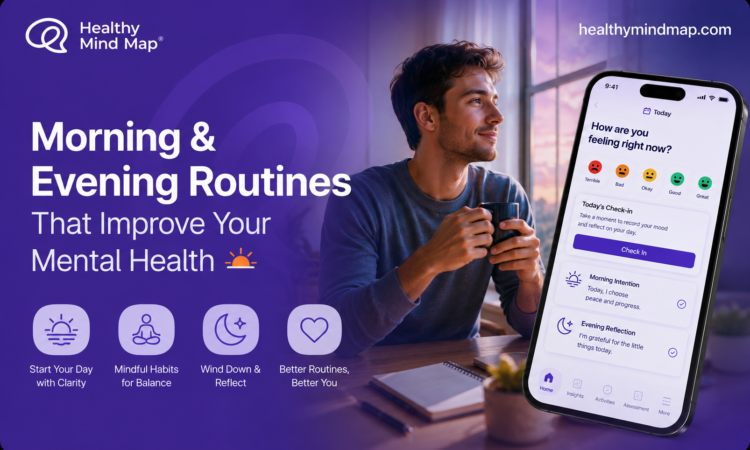
Morning & Evening Routines That Improve Your Mental Health 

A strong mental health routine rarely begins during moments of crisis. It is built quietly, day by day, through consistency. While many people focus on occasional self-care, research consistently highlights the importance of daily routine in shaping emotional stability, stress regulation, and long-term resilience. 

Morning and evening structures are not just productivity tools. They are powerful anchors for mental clarity. When you build a daily wellness routine that supports emotional awareness and balance, you create a foundation that protects your well-being over time. 

Let’s explore how intentional morning and evening habits to improve mental health can reshape the way you think, feel, and function. 

Why Daily Structure Matters for Mental Health? 

The human brain responds strongly to predictability. Routine lowers cognitive overload, reduces stress responses, and creates a sense of control. This is why psychologists frequently emphasize the importance of daily routine for emotional regulation. 

When individuals establish good daily habits, they reduce decision fatigue and create stable psychological cues. These cues reinforce safety, consistency, and internal balance. 

Healthy routines for mental health are not about rigid schedules. They are about intentional structure. The best habits for mental health are often small, repeatable actions that accumulate into long-term change. 

Morning Routines That Support Mental Clarity 

Your morning sets the tone for your entire day. Instead of rushing into notifications, emails, and external demands, consider building a daily wellness routine that prioritizes emotional grounding. 

1. Begin with Stillness and Awareness 

Spending even five minutes in quiet reflection helps activate calm neural pathways. This might include deep breathing, light stretching, or brief journaling. Healthy habits for mental health often begin with awareness. Recognizing how you feel before engaging with the world allows you to respond rather than react. 

Using a structured tool like Healthy Mind Map during this time can help you track emotional patterns and maintain consistency in your mental health routine. 

2. Limit Immediate Digital Overload 

Checking social media or news first thing in the morning can elevate stress levels. One of the best habits for mental health is delaying digital stimulation for at least 20–30 minutes. This small shift strengthens daily habits to improve life because it protects your emotional baseline before external information influences it. 

3. Move Your Body 

Physical activity has a direct impact on mood regulation. Even light movement, such as stretching or a short walk, contributes to healthy routines for mental health. Movement increases endorphins and reduces cortisol levels, reinforcing good daily habits that support emotional balance. 

4. Set an Intentional Focus 

Rather than creating a long to-do list, choose one emotional or behavioral intention for the day. For example: 

  • “Today I will respond calmly to stress.” 
  • “Today I will practice patience.” 

Intentional focus reinforces habits to improve mental health because it aligns behavior with awareness. 

Evening Routines That Strengthen Emotional Recovery 

Evening routines are equally important. They allow your nervous system to transition from stimulation to rest. 

A consistent mental health routine at night promotes better sleep, emotional processing, and stress reduction. 

1. Reflect on Your Emotional Patterns 

One of the most effective daily habits to improve life is reviewing your day briefly. What went well? What triggered stress? What helped you regulate? 

Healthy Mind Map can support this step through structured mood tracking and pattern recognition. While it does not provide therapy services, it helps reinforce the importance of daily routine by highlighting trends over time. 

2. Reduce Stimulation Before Bed 

Limiting screen time and bright light exposure before sleep supports healthy habits for mental health. Sleep disruption is strongly connected to emotional instability. When you maintain healthy routines for mental health at night, you protect your emotional stability the following day. 

3. Practice Gratitude or Cognitive Reframing 

Ending the day by identifying positive moments strengthens good daily habits. Research shows that gratitude practices improve mood and reduce stress over time. This reinforces daily wellness routine consistency and contributes to long-term resilience. 

4. Maintain Consistent Sleep Timing 

The importance of daily routine extends to sleep cycles. Going to bed at similar times each night regulates circadian rhythms, which directly impact mood stability. Sleep consistency is one of the best habits for mental health and one of the most overlooked daily habits to improve life. 

Building a Sustainable Mental Health Routine 

The most effective mental health routine is one you can maintain. Instead of attempting a dramatic lifestyle overhaul, focus on: 

  • One new habit per week 
  • Small, measurable adjustments 
  • Tracking emotional responses 
  • Evaluating patterns monthly 

Healthy habits for mental health build gradually. The goal is not perfection but consistency. 

Healthy Mind Map supports this process by allowing users to observe trends, correlate behaviors with mood shifts, and strengthen awareness. By reinforcing the importance of daily routine through measurable insights, users gain clarity over time. 

The Science Behind Daily Habits and Emotional Health 

Behavioral psychology emphasizes repetition as the foundation of change. Neural pathways strengthen when behaviors are repeated consistently. Daily wellness routines create predictable cues that stabilize mood. Good daily habits reduce anxiety because the brain interprets predictability as safety. 

Healthy routines for mental health also improve executive functioning. When mornings and evenings are structured, decision fatigue decreases. This leaves more mental energy available for meaningful activities. The best habits for mental health are rarely dramatic. They are small patterns repeated consistently. 

Final Thoughts 

Morning and evening habits are not simply productivity tools. They are emotional stabilizers. The importance of a daily routine cannot be overstated. When you build a consistent daily wellness routine filled with good daily habits, you create a foundation for clarity and resilience. The best habits for mental health are often quiet, repeatable actions.  

Small shifts in structure can dramatically improve emotional balance over time. Healthy routines for mental health do not require perfection. They require intention. And intention, repeated daily, becomes transformation. 

Frequently Asked Questions 

1. Why is the importance of daily routine emphasized in mental health? 

Routine provides predictability, reduces stress, and supports emotional regulation. The importance of daily routine lies in its ability to create psychological stability. 

2. What are some daily habits to improve life emotionally? 

Simple practices such as journaling, movement, structured reflection, and consistent sleep are daily habits to improve life and strengthen emotional balance. 

3. How do healthy habits for mental health improve long-term well-being? 

Healthy habits for mental health reinforce neural pathways associated with calmness and resilience. Over time, repetition strengthens emotional stability. 

4. What makes a strong mental health routine? 

A strong mental health routine includes morning awareness, evening reflection, consistent sleep, and intentional emotional tracking. 

5. Can Healthy Mind Map support healthy routines for mental health? 

Yes. Healthy Mind Map helps reinforce healthy routines for mental health by providing structured mood tracking and pattern recognition that strengthen awareness over time. 

Mental Health Myths vs. Facts: What Science Actually Says 

Mental health is one of the most talked-about topics of the last decade, yet misinformation continues to shape how people think, speak, and act around it. Despite growing access to research, education, and mental health apps, myths about mental health remain deeply embedded in everyday conversations. These misunderstandings often prevent people from seeking support, talking openly, or even recognizing their own emotional needs. 

Understanding mental health myths and facts is not just about correcting outdated beliefs. It is about replacing stigma with evidence. When we look at verified mental health facts instead of relying on assumptions, the narrative around emotional well-being becomes clearer, more compassionate, and more grounded in science. 

Let’s examine some of the most common myths vs facts and explore what research actually tells us. 

Myth 1: Mental Health Problems Are Rare 

One of the most persistent myths about mental health is the belief that emotional struggles are uncommon or limited to a small portion of the population. This assumption feeds the myth of mental illness as something unusual or extreme. 

The reality, supported by global health data, is very different. Mental health conditions such as anxiety and depression affect millions of individuals across age groups, professions, and backgrounds. These mental health awareness facts show that emotional challenges are far more common than many people realize. 

When people understand these facts about mental health, it reduces isolation. Struggling emotionally is not a rare failure; it is a widespread human experience. Recognizing this shifts the conversation from judgment to understanding. 

Myth 2: Mental Illness Is a Sign of Weakness 

Another damaging myth of mental illness is the idea that emotional distress reflects a lack of resilience or character. Phrases like “just be stronger” or “snap out of it” often stem from a misunderstanding of how mental health works. 

Scientific research consistently shows that mental health is influenced by multiple factors, including brain chemistry, genetics, life stressors, trauma, sleep patterns, and environmental conditions. These are measurable biological and psychological components, not personal flaws. 

Accurate mental health facts confirm that emotional regulation involves neurological processes, not simply willpower. When we examine myths vs facts objectively, it becomes clear that strength is not the absence of struggle. In many cases, strength is acknowledging when something feels off and taking steps toward awareness. 

Myth 3: Talking About Mental Health Makes It Worse 

Some individuals believe that discussing emotional challenges will intensify them. This belief contributes to silence and avoidance. 

However, research in psychology indicates that structured emotional awareness can improve coping ability. Reflective practices such as journaling, mood tracking, and regular check-ins have been associated with improved emotional clarity. These mental health awareness facts demonstrate that awareness often reduces distress rather than amplifying it. 

This is where tools like Healthy Mind Map become relevant. Healthy Mind Map does not provide therapy services, but it supports structured emotional tracking and self-reflection. Encouraging users to document patterns and recognize triggers helps individuals observe their emotions rather than suppress them. The distinction between myths about mental health and evidence-based approaches becomes clear when awareness leads to better regulation. 

Myth 4: Mental Health Only Matters in Crisis 

A common misconception is that mental health is only important when someone experiences severe symptoms. This reinforces the myth of mental illness as something that only exists in extreme circumstances. 

In reality, mental health exists on a spectrum. Just as physical health requires maintenance, so does emotional well-being. Every day stress, burnout, or mood fluctuations are part of the broader mental health experience. Preventative practices, such as regular emotional tracking, help people identify patterns before they escalate. 

Mental health myths and facts differ sharply here. The myth suggests waiting until something breaks. The fact suggests ongoing awareness and proactive care. 

Myth 5: Technology Cannot Support Mental Health Awareness 

There is ongoing skepticism about whether a mental health app can truly make a difference. While no digital tool replaces professional care when needed, science supports the role of structured self-monitoring in improving emotional insight. 

Behavioral research shows that tracking habits and emotional responses increases self-regulation. Healthy Mind Map, for example, integrates mood tracking with behavioral correlation, helping users connect lifestyle patterns to emotional states. This form of mental health support is grounded in reflection and data awareness, not the replacement of care. 

Understanding these mental health awareness facts helps clarify that digital tools are not solutions by themselves, but they can strengthen awareness and consistency. 

Why Separating Myths vs Facts Matters? 

When myths about mental health dominate the conversation, stigma grows; when mental health facts guide the discussion, clarity increases. 

Separating myths vs facts helps people: 

  • Recognize emotional patterns earlier 
  • Reduce self-judgment 
  • Make informed decisions 
  • Normalize open conversations 

Mental health myths and facts are not just abstract debates. They influence whether someone feels safe speaking up or feels pressured to stay silent. 

Final Thoughts 

The conversation around mental health is evolving, but misinformation still lingers. By examining mental health myths and facts through a scientific lens, we move away from outdated narratives and toward informed understanding.  

The myth of mental illness has historically shaped silence. Science, however, provides clear mental health facts that encourage awareness, reflection, and proactive support. Replacing myths about mental health with verified knowledge does more than correct errors. It builds a healthier culture, one grounded in empathy, education, and truth. 

Frequently Asked Questions 

1. What are some common myths about mental health? 

Common myths include the belief that mental health problems are rare, signs of weakness, or only serious during a crisis. Verified mental health facts contradict these assumptions. 

2. Why is the myth of mental illness harmful? 

The myth of mental illness reinforces stigma and discourages individuals from acknowledging emotional challenges or seeking appropriate support. 

3. What are reliable facts about mental health? 

Facts about mental health include that mental health exists on a spectrum, emotional awareness improves regulation, and emotional challenges are common across all demographics. 

4. How do mental health awareness facts reduce stigma? 

Mental health awareness facts provide education rooted in research, replacing fear-based narratives with evidence and understanding. 

5. Can tools like Healthy Mind Map support awareness? 

Healthy Mind Map supports structured emotional tracking and reflection, helping users understand patterns and build proactive mental health support habits. 

The Best Ways to Do Daily Mood Check-Ins (and Why They Matter) 

In a world that’s constantly moving at a rapid pace, it can be easy to forget to take a moment for yourself. However, prioritizing mental health is essential, and one effective way to stay grounded is through daily mood check-ins. These simple practices can help you track your emotional well-being, spot patterns, and adjust your self-care strategies accordingly. 

But what exactly are mood check-ins, and how can they make a difference in your life?  

This blog will explore the best ways to perform emotional tracking each day and the benefits that come with it. We’ll also introduce Mood Check-Ins apps like Healthy Mind Map, which can help you stay on top of your mental health. 

What Are Daily Mood Check-Ins and Why Do They Matter? 

First things first, what is a mental health check-in? A daily mental health check-in is a simple practice where you take a moment to evaluate your emotional state, thoughts, and overall well-being. It’s a tool for emotion tracking, helping you identify how you’re feeling mentally, emotionally, and physically. 

But why is this so important? 

The modern world’s stresses can take a toll on mental health without us realizing it. By engaging in mood tracking every day, you get a clearer picture of how you’re truly doing. This kind of emotional check-in for adults allows for: 

  1. Increased Self-Awareness: It’s easy to ignore our feelings, but emotion tracking helps bring awareness to our mental state. 
  1. Mental Health Insight: Regular mental health check-ins help you identify if there’s an ongoing issue, like anxiety or stress, that needs addressing. 
  1. Better Self-Care: By tracking emotions, you can pinpoint what activities, people, or situations make you feel better or worse, allowing you to adjust your self-care routine. 
  1. Prevention: Consistently tracking your moods makes it easier to spot early signs of emotional challenges, such as depression or burnout, before they escalate. 

Top Methods for Doing Daily Mood Check-Ins 

Now that we understand why daily mood check-ins matter, let’s explore the best ways to track your emotional state each day. 

  1. Keep a Daily Journal for Mood Tracking 

One of the simplest ways to perform emotional tracking is through journaling. A few sentences about how you feel at the beginning or end of the day can help you identify emotional patterns. This can be a free-writing exercise, or you can use a mental health check-in post format with questions like: 

  • How am I feeling today, emotionally? 
  • What went well today? 
  • What made me feel stressed, anxious, or upset? 
  • Did I do something today that made me feel good? 

Regular journaling helps you reflect on your day, process emotions, and track your overall mood. 

  1. Use a Mood Check-In App 

Sometimes, it’s easier to keep track of your emotional state using an emotion tracker app. There are various Mood Check-In apps available, but Healthy Mind Map is a standout for its combination of mental health resources and tracking tools. These apps let you log your feelings on the go, which makes mood tracking even more accessible. 

Features of these apps often include: 

  • Daily check-ins that ask you to rate your mood on a scale 
  • Options to track feelings, thoughts, or physical symptoms 
  • Insights on mood patterns over time 

By using an app, emotion tracking becomes a convenient habit that’s easy to keep up with every day. 

  1. Practice an Emotional Check-In for Adults Through a Routine 

A structured routine for daily mental health check-ins can also be helpful. You might incorporate a moment of mindfulness or meditation in the morning or evening, where you focus on tuning into your feelings. During this time, ask yourself: 

  • What emotions am I feeling right now? 
  • What are the main sources of these emotions? 
  • How do my body and mind feel in this moment? 

By making it part of your routine, you make mental health check-ins a priority, no matter how busy life gets. 

  1. Conduct Check-In Activities for Adults 

If you’re the kind of person who benefits from a little structure, check-in activities for adults can be a great way to track your mood. You might enjoy: 

  • Completing a mood worksheet each day 
  • Using mood cards to identify emotions 
  • Doing a 5-minute meditation to reflect on your feelings 
  • Engaging in simple self-reflection or mindfulness exercises 

These activities, along with your regular emotion tracking, can promote emotional clarity and awareness. 

  1. Set Weekly or Monthly Goals Based on Your Check-In 

Once you’ve developed the habit of doing daily mood check-ins, extend this practice by setting small mental health goals. For example, if you notice you’re feeling consistently anxious, you might set a goal to incorporate stress-reduction activities into your routine, like yoga or deep breathing exercises. The key is to use the insights gained from mood tracking to create actionable steps that improve your emotional health over time. 

How Mood Tracking Improves Your Mental Health? 

By doing regular mental health check-ins, you can see significant improvements in both your emotional well-being and your approach to life’s challenges. 

  1. Reduces Stress and Anxiety 

If you’re tracking your mood consistently, you’ll begin to see patterns, including triggers for anxiety or stress. Once you identify these, you can take steps to minimize or avoid them. 

  1. Increases Emotional Regulation 

Knowing how you’re feeling on a day-to-day basis allows you to regulate your emotions more effectively. With emotion tracking, you’re more attuned to your emotional state, which helps you stay calm and balanced. 

  1. Improves Overall Mental Health 

When you have a better understanding of your emotions, you’re in a better position to improve your mental health. Daily mental health check-ins provide insights that enable you to make the right decisions about your well-being. 

Conclusion: The Power of Daily Mood Check-Ins 

Emotional tracking is more than just a trend; it’s a proven method for enhancing your mental health and well-being. By committing to daily mental health check-ins, you can boost your emotional awareness, identify patterns, and take steps toward a healthier, more balanced life. 

Start tracking your emotions today with an emotion tracker or use Mood Check-Ins apps like Healthy Mind Map to support your journey. Small check-ins can lead to powerful improvements in your mental well-being. 

Frequently Asked Questions (FAQs) 

Q. What is emotion tracking, and why is it important? 

Emotion tracking is the process of monitoring and recording your emotional state regularly. It’s essential because it helps you recognize patterns in your feelings, which can lead to better self-awareness and mental health management. 

Q. How can I do a mental health check-in without overthinking? 

Start small, use a simple scale to rate your mood each day, or answer one question like “How am I feeling today?” This makes it easier and less overwhelming. 

Q. What are the best check-in activities for adults? 

Some effective activities include journaling, mindfulness meditation, mood rating apps, and self-reflection. All of these can help you stay aware of your emotional state. 

Q. How can mood tracking improve my mental health? 

Mood tracking helps you identify patterns in your emotions, manage stress, reduce anxiety, and improve emotional regulation over time, contributing to better mental health.